Blog
Start with the Art
In 2022, the U.S. Department of Education awarded Arts for Learning Maryland (A4L) the DOE Education Innovation and Research grant to conduct a multi-year research project to engage 2,500 students in Prince George’s County Public Schools (PGCPS) in Kindergarten through third grade. The project, titled Start with the Art, aimed to demonstrate that arts-integrated school programs can improve the academic performance and social emotional well-being of students. This month, we wrapped up our final rotation of lessons co-taught by teacher and artist pairs at Tayac Elementary School.
“Before, I was always frustrated and felt that students did not listen, but through the music, through the art, I can present information in a way that makes them excited.”
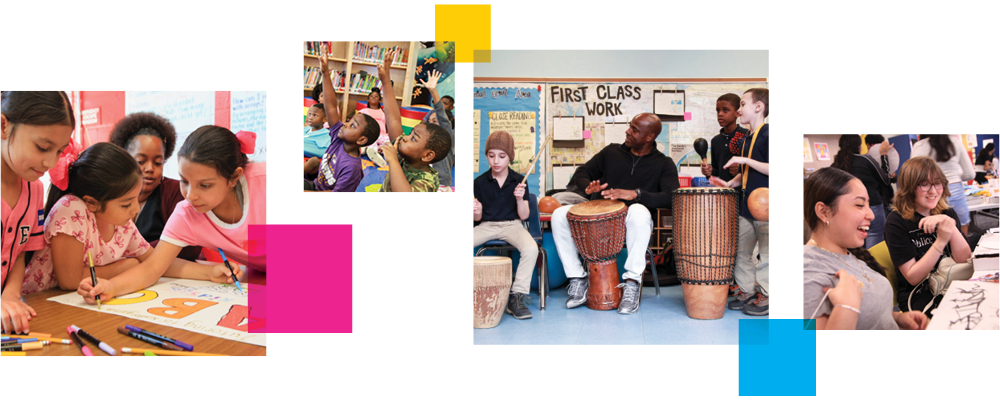
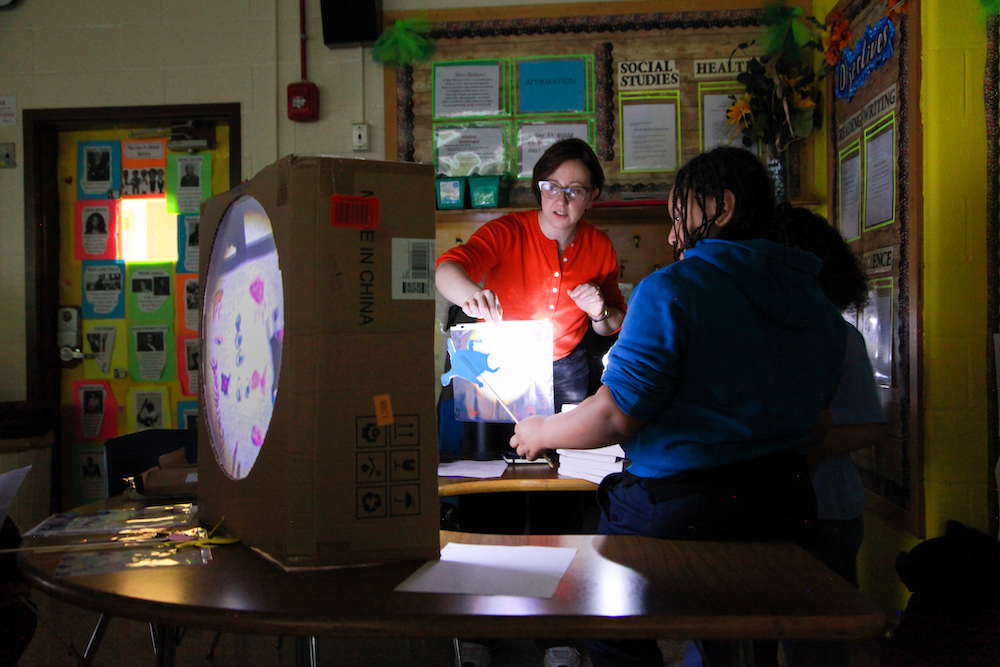
What does arts integration look like in a classroom? At Tayac Elementary, theatre artist Liza Yanovich shared the art of shadow puppetry with Mrs. Ordonez’s third-grade students. In her classroom, arts integration looked like children creating fictional characters inspired by non-fiction reading as shadow puppets, writing small-group scripts for their characters, and performing for classmates. It looked like fueling student innovation by supplying basic construction materials, markers, transparency film, and flashlights, and creating entire three-dimensional worlds, limited only by their imaginations. It looked like laughter and determination to bring to life what was pictured in their minds.
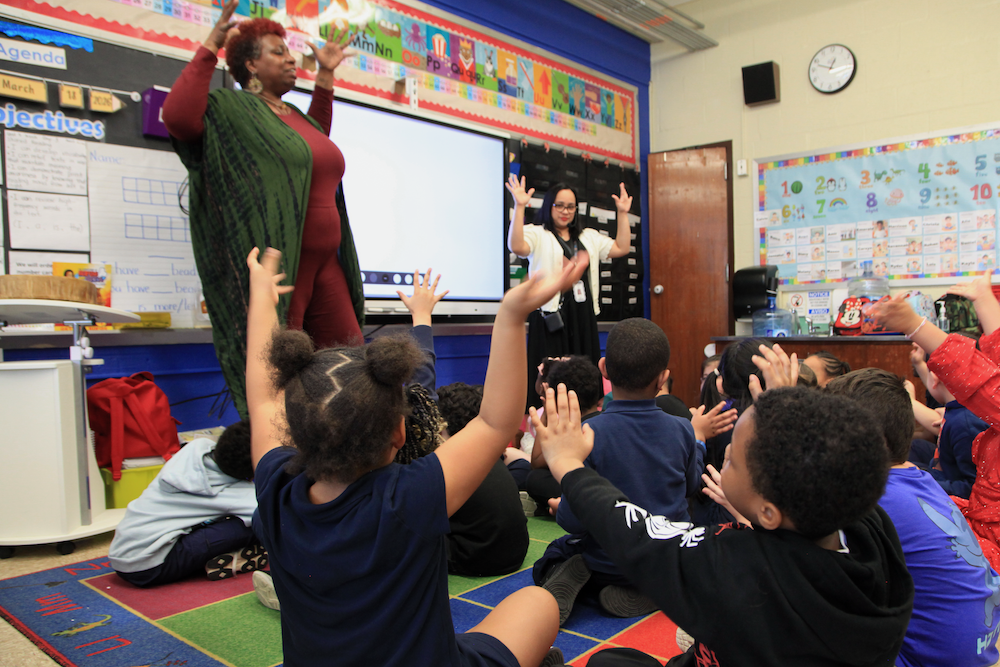
Nearby, the sounds of rhythmic counting, tapping, and clapping filled Ms. Asuncion’s Kindergarten classroom. She and teaching artist Ama Chandra Brown led a math lesson integrated with performing arts and music. Here, arts integration looked like confidence and pride as students “counted on” numbers between 10 and 19. The Kindergarteners first learned about steady beats and kept a rhythm through a number of body percussion methods. They then began composing and decomposing the numbers using a steady beat, eager to demonstrate and perform. Arts integration looked like participation and success. “I have seen growth in student engagement,” said Ms. Asuncion. “Before, I was always frustrated and felt that students did not listen, but through the music, through the art, I can present information in a way that makes them excited.”
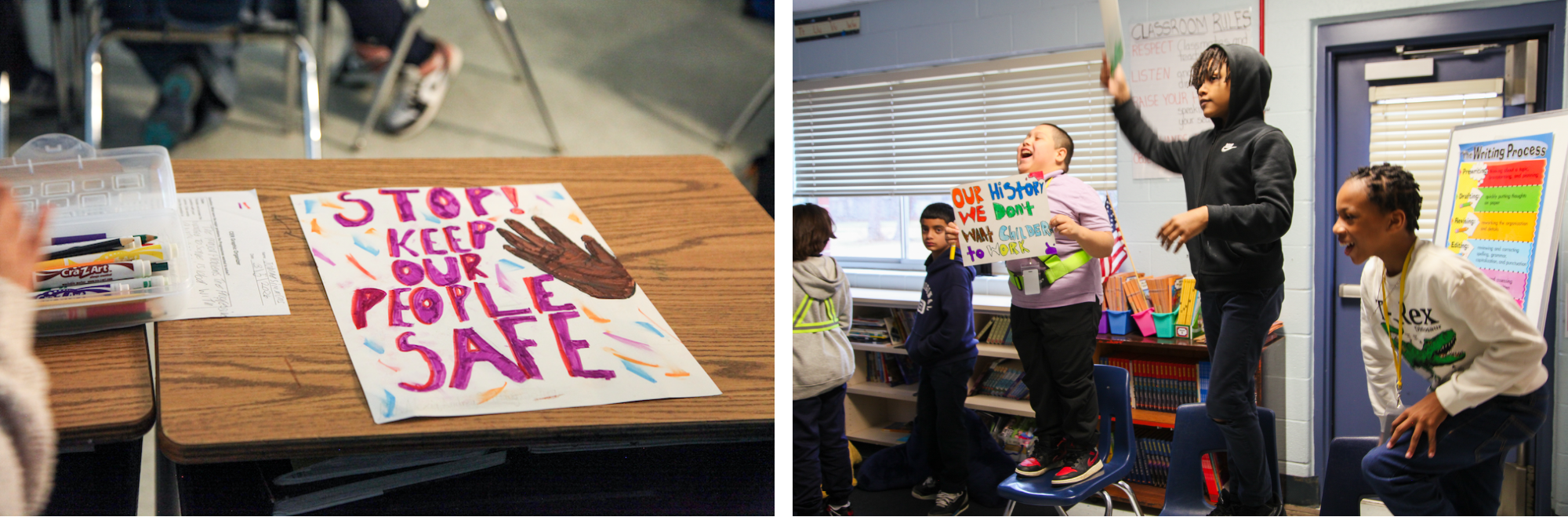
In Ms. Guevara’s fifth-grade class, arts integration looked like a stage for debate. Proponents of child labor in the early 1900s challenged advocates of stricter regulation and protection of children in the workforce. There were passionate voices on both sides of the aisle, and theatre artist Brandon Kanion stood in the center. Students held handmade signs expressing their positions on the issue as they engaged in a structured debate. Arts integration looked like learning through the embodiment of a historical moment from multiple perspectives. “Children need an education! They need to be in school!” one side declared. “Jobs give children practical experience that schools can’t provide!” countered the other. It looked like respect as the students allowed each other space and time to be heard without interruption. Afterward, the students, artist, and classroom teacher analyzed the arguments to determine who won the debate.
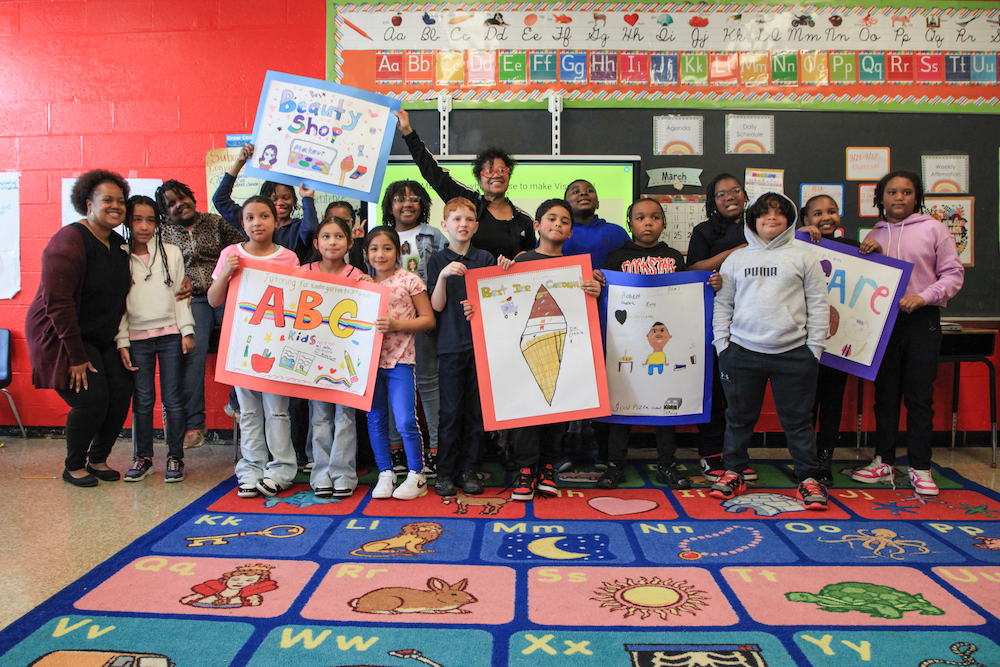
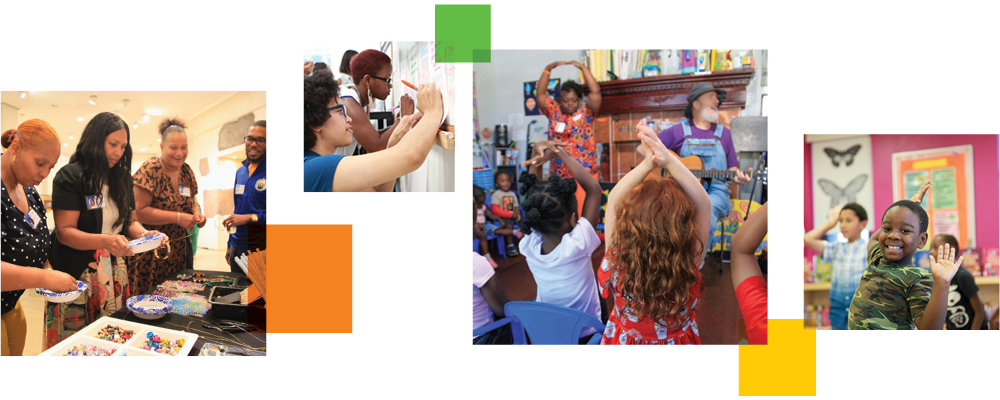
Mrs. Duckett’s third-graders donned entrepreneurial hats to market their own newly created businesses. Small groups of students worked with visual artist Maria Weaver to use elements of art in ways to best capture the attention of their audience. In this classroom, arts integration looked like marketing teams designing full-color posters to advertise businesses. They thoughtfully considered which messages were the most important to amplify about their new pizza parlors, pet care businesses, tutoring services, ice cream factories, and fashion boutiques. Arts Integration looked like making tough design choices and cooperation. Not everyone always agreed, but decisions had to be made to complete the final product. It also looked like copyediting and attention to detail. Spelling errors were not simply scratched out, they were transformed. “I want you to turn that mistake into a masterpiece,” Ms. Weaver told one group. And masterpieces, they made.
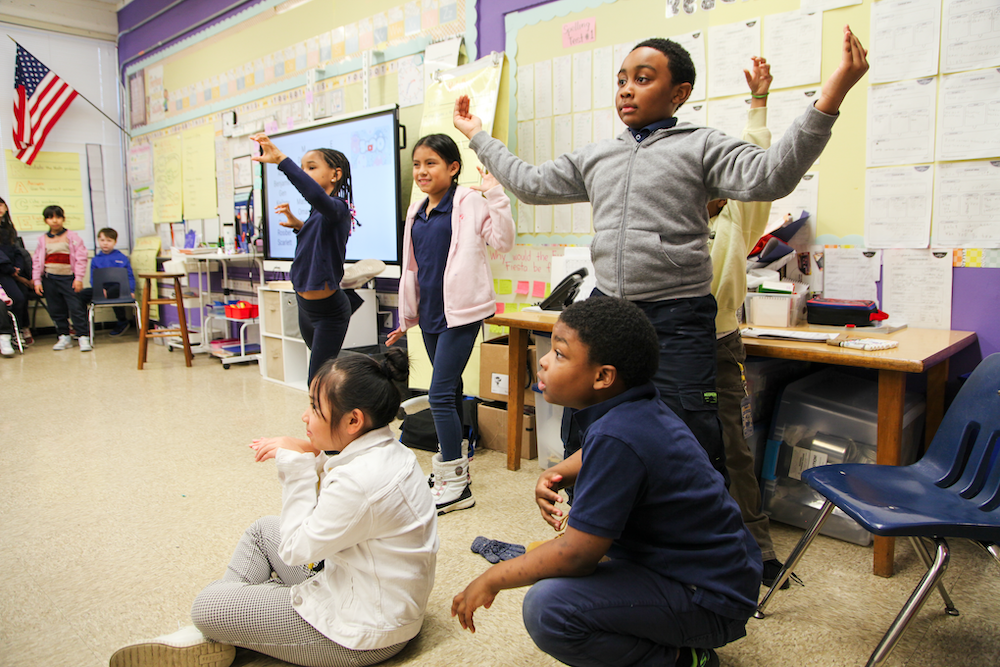
In Ms. Reyes’s second-grade class, reading the story Jack and the Beanstalk, arts integration looked like wide-eyed students, mouths agape in exaggerated gestures. “What does surprise look like?” theatre artist Julie Kurzava asked the class. “Show me your surprised faces!” Soon after, students pushed their desks to the middle of the room to create a large perimeter–just enough space for small groups to choose a scene from the story, position themselves at different levels–low, middle, and high– to create a tableau–a scene from the story, frozen in time. Arts integration looked like collaboration and cooperation as the students worked together to decide how to represent the characters and their emotions. And it looked like understanding as they analyzed the text to make sure what they wanted to convey was accurate.
“I learned that using your imagination makes things better.”
In Ms. Hernandez’s second-grade classroom, arts integration looked like a graphic design studio. Visual artist, Cortland Jones, reviewed the elements of design with the class, then tasked students with creating an original number wheel to use as a tool in their math lessons. They drew a circle, then divided it into 6 sections, each filled with a two-digit number. How they separated the circle was up to them, leading to unique design features. The young designers turned ordinary number wheels into pizzas, pumpkins, beach balls, and even a canteen. After they wrapped up, students took turns speaking about the experience. In this moment, arts integration looked like courage–public speaking is a skill that requires bravery and practice–but it also looked like brilliance and joy as one young designer shared, “I learned that using your imagination makes things better,” and another, the creator of a bunny-cat number wheel offered, “If you ever have a dream about being an artist, it will come true.”
As we await additional data from our assessment partners, we reflect on what we’ve already gained from this project. Arts integration has enabled us to build powerful relationships between PGCPS classroom teachers and teaching artists through lesson planning, co-teaching, and reflection on arts integration in the classroom. The project used different art forms to engage students, creating space for them to experience and regulate emotions. It also used students’ experiences of setbacks and failures in their artistic work to develop perseverance. It capitalized on collaborative work to foster positive peer relationships. Not to mention, arts integration made learning fun.
Interested in bringing arts-integrated learning to your school or district? Reach out to partnerships@artsforlearningmd.org.