


Blog
A Piece of the Bay
By Lori Mellendick, fifth-grade art teacher at Ducketts Lane Elementary
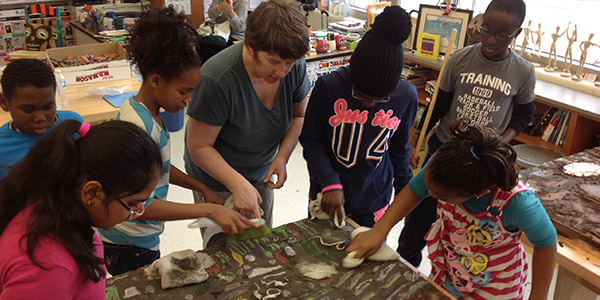
This December, my fifth-grade students gathered around a table functioning as young archaeologists, researchers, and artists. Their collaborative clay mural sat before them covered in grout waiting to be exposed. As my students began to buff the dried grout away, the ceramic animals they sculpted and arranged in the mural earlier in the fall began to pop through. My class had been working toward this moment since Young Audiences visual artist Amanda Pellerin first arrived as our artist-in-residence in October.
The massive four-by-eight-foot panels of the mural took up the entire floor. I didn’t realize how busy my classroom could be as we built something so large. Slowly, a vast food web stretched across the mural revealing the entire habitat network of the Chesapeake Bay.
On this final culminating day, my students experienced what we like to call their “Aha!” moment. They took a step back and discovered harmony behind their mural as a collaboration. The looks on their faces expressed the “now we get it” type of feeling. They ended by celebrating each other by giving and receiving compliments of their work. The positive energy in the room was out of control!
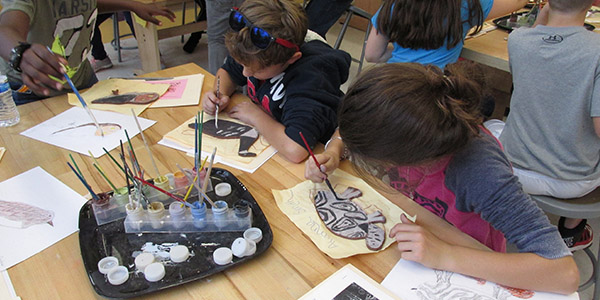
In October, my students had spent five days conducting research of Maryland animals surrounding the Chesapeake Bay as a theme. They built an understanding of how these animals survive depending on their diets. The students also investigated the Chesapeake’s surrounding habitat by studying the water cycles, plants, and local natural resources. In order to display these facts on a visual web, the students had to be imaginative. This is where Amanda’s expertise came in. Amanda guided students through the necessary steps to creatively assemble this piece of work.
There were times when kids pondered whether or not they should take an artistic risk by making verbal decisions in front of a group. When energy subsided, some surprising moments occurred when a few particularly shy students stepped up to the plate and made executive decisions for the group. It was a wonderful chance for students to express creativity in ways that they didn’t expect to, especially within the subject of science.
I wanted to find a meaningful residency that would integrate the arts into the subject of science. I knew that this was the perfect opportunity to find a project that could cover environmental research in a creative way. Knowing Amanda’s experience as a Young Audiences roster artist, I knew that the kids would get a lot out of the program.
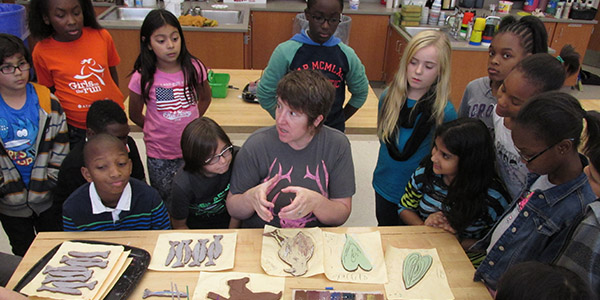
It was important to bring in an outside artist because it gave some of our teachers an understanding of how the artistic process works. Teaching children artistic behaviors is important because it demonstrates tasks such as researching, modifying, and executing that energy into a product. It doesn’t work like a magic trick where *poof*, a beautiful piece of artwork suddenly appears. It takes work. It’s similar to the scientific process. You formulate a hypothesis, test your theories, and then provide a conclusion statement in the end. In this case, our conclusion was a mural that demonstrated a deeper understanding of the Chesapeake Bay.
Using a tactile form such as clay, gave students a substantial gift in the end. Since these fifth graders will be going onto middle school very soon, I wanted to give them an opportunity to leave their mark upon the school. In April, there will be an unveiling of the mural in a reserved space across from a beautiful fountain. Strong light filters into this area which will give the mural the perfect spotlight that it deserves. We can’t wait to put it up!

When you are studying something across the board of a curriculum, it resonates with children. It hits on so many different content levels. These experiences give so much more meaning to the students than you would expect. I immediately go back to my own experiences and remember the impact that resident artists had upon me in school. I wanted to give my students that same opportunity.
Learn more about Amanda and her programs for schools at yamd.org.

YA launches new five-year strategic plan
In July 2014, Young Audiences adopted its new five-year strategic plan, “Transforming the Lives and Education of Our Youth.” In the coming weeks, we will profile our four strategic directions and our exciting plans related to each. To kick off this series, Stacie Sanders Evans, Young Audiences executive director, wrote about how the plan was created and the exciting work that is to come.
More than 300 volunteers contributed to Young Audiences’ strategic planning process, spanning May 2013 to July 2014, to build an ambitious new strategic plan that sets the organization’s course for the next five years to significantly grow its reach–ultimately impacting the education of 50,000 more young people across this state every year.
During the development of the plan, Young Audiences worked with two consultants to conduct an external and internal review of the organization; more than 50 board members, staff members, artists, teachers, organizational funders, and school administrators gathered for a day-long strategic planning retreat; and smaller working groups composed of artists and educators spent two months exploring six strategic areas that came out of the retreat’s discussions and developed goals for the plan. It was an honor to co-lead this work with Bill Buckner, chair of the Strategic Planning Committee and Young Audiences’ immediate past board president. Our new plan was adopted by our board in July 2014 and since then our staff and board have been laying the foundation necessary to take on the challenges laid out in our plan.
Some of you may not be aware that Young Audiences is the nation’s largest arts education network and it began in Baltimore in 1950. During our 64-year history, the Maryland affiliate of Young Audiences has continually expanded its services to Maryland students, teachers, and artists to give more students the opportunity to experience and learn through the arts. We are proud of our rich history and roots as an organization focused on exposing young people to the arts. Yet, we are increasingly excited by our evolving role as an education organization that is transforming the lives and education of young people by building communities of educators, professional artists, and parents and enabling them to help our children realize their full potential through the arts.
The Next Five Years
Our vision remains the same as it did five years ago: “One day, every student in Maryland will have the opportunity to imagine, to create, and to realize their full potential through the arts.” Our mission also remains unchanged: “To transform the lives and education of youth through the arts by connecting educators, professional artists, and communities.”
What has changed is that now, more than any other time in our history, Young Audiences is poised to realize this vision and achieve this mission for all Maryland children.
During the next five years we plan to significantly increase Young Audiences’ transformative impact on students and on education, and to accomplish this by:
- Expanding our school district arts integration partnerships
- Investing in and growing our teaching artist community
- Building and sharing evidence of our impact
- Strengthening and expanding our programs
Through a series of blog posts, I will dive deeper into each aspect of this plan and share updates on our progress. I welcome your feedback and participation in our work.
We are excited about the power of the arts to improve educational and life outcomes for students, and we are proud of our plans and the community we are building to leverage the arts to have the greatest impact possible on our students. We hope you will join us in this work!
– Stacie Sanders Evans, Young Audiences Executive Director
You can read the full plan at yamd.org.
To learn more Young Audiences’ mission and our work, we invite you to join us at one of our upcoming On the Bright Side Tours. Learn more and sign up online.

Make your own drums with January’s smART Tip
In our January smART Tip, Young Audiences musician and percussionist Steve Cyphers shows how you can easily and inexpensively create bucket drums for your students with materials found at your local hardware store. Get started by pressing play below.
[youtube http://youtu.be/rWIGPp_NTOs?list=PLUssR-3GtBZfiKXpU72zQAkgXh3wBcBzQ]
smART Tips is a monthly video series sharing tips for educators who are interested in new, creative ways to use the arts in their classroom with students. See all smART Tips to date here. Interested in a specific topic? Let us know!
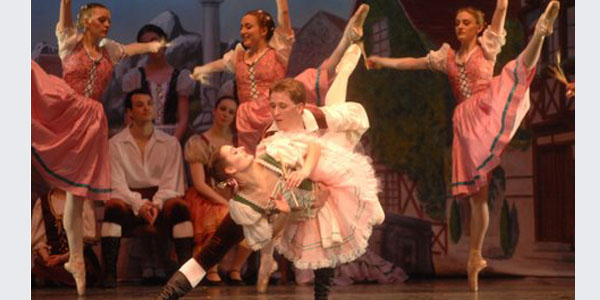
Meet our artists: Ballet Theatre of Maryland
Young Audiences’ roster of artists continues to grow to encompass new artists, ensembles, and art forms, from slam poets to improvisers to Capoeira masters.
We’ll be regularly posting interviews with our artists, giving them a chance to share more about themselves and their experiences bringing their Young Audiences programs to schools. We recently sat down with Dianna Cuatto of Ballet Theatre of Maryland.
How did you first hear about Young Audiences?
My predecessor joined Young Audiences before I came to Ballet Theatre of Maryland 12 years ago, and it was my first experience with the organization. Other dance companies that I worked with hadn’t done anything like it, so I did my research and found that I really liked Young Audiences’ mission statement and philosophy. When I completed my first Teaching Artist Institute (TAI) seminar, I found it very helpful for connecting education with art to help students better their lives.
What has been the most memorable part of the programs you’ve brought to students with Young Audiences?
Seeing the impact the arts can have on so many lives is the most memorable part. When we go out to schools, we see how it touches the lives of the students we are able to either perform for or work with during an arts-integrated artist-in-residence program. We have learned so much from Young Audiences and have gained tools that we use in our other educational program offerings, too.
There are a lot of students who have never had exposure to ballet. Do you find that bringing classical ballet to schools can be a unique opportunity for students?
Absolutely. Whenever I ask a school what they hope the students will get out of a program, they want their students to have that exposure to a real ballet. One thing that Ballet Theatre of Maryland does that’s different from other ballet companies I’ve been a part of is that we actually bring a real ballet to the students so they can have that experience. It’s very rewarding and our dancers enjoy doing it. The students express how much they love it. Some students may never have known that they enjoy ballet if they hadn’t been exposed to it during one of our programs at their school.

How does your art form connect students to what they are learning in school?
We do a lot of literary and historical pieces. For example, our assembly “Pirates of the Chesapeake” is based on pirate history. We also have an assembly, “A Midsummer Night’s Dream,” and other programs that may relate to what they are studying in school. There is also the production of excerpts from “Excalibur” which we call the “Medieval Festival.” We mirrored it after a mini-Renaissance festival so students get experience with coats of arms and other material they learn about from that time period through dance.
How do the lessons and skills you teach students through your art form apply to their everyday lives outside of the classroom?
It seems that everything we do relates to their everyday lives. Our most popular assembly, “An American Journey through Dance,” teaches students about the many different cultures in our country. They are able to experience aspects of those different cultures through dance. There is something about the emotions and passions through the expression of dance that provides tools to understand each other, which is a very powerful thing for all of us. There is a culture embedded in all of the art that we do, and it is our place to pass it on.
What is the most rewarding aspect of being a Young Audiences roster artist?
One aspect would be the opportunity to see what other colleagues are doing, and how they are using the arts to impact children. Just being a part of the roster and being involved with different schools to see what children are able to gain through our programs is so rewarding. When you put all of the roster artists together, it creates a great tapestry of wonderful things students are able to experience in all of our different areas.
Why do you believe dance specifically–or the arts in general–is important for every student to have access to?
Our motto is: “Dance is a language more powerful than words.” No matter what language children speak, they can understand what you’re saying through dance. This is true for many art forms. We can communicate and break down barriers through that powerful language. It’s not just that studies show how art impacts students and helps them learn, it’s that we know the arts engage students in all of the senses, allowing them to experience it first-hand so they learn more intensely. When something engages all of your senses, it is easier to remember and apply it to other areas or circumstances. Art provides all of the learning tools that different children need because they learn in different ways.
Learn more about Ballet Theatre of Maryland’s offerings through Young Audiences.
Keep an eye out for more artist interviews! See all artist interviews to-date here.
Celebrating 2014 at Young Audiences
We’ve been counting down to 2015 by reflecting on the highlights of the past year on our Facebook page. From another successful Taste the Arts gala to our move into a new home to celebrating Maryland Young Audiences Arts for Learning Week, it has been quite a year. Head on over to Facebook to see other highlights and add some of your own by using the hashtag #LookBack2014.
Thank you for your continued support of Young Audiences as we work to transform lives and education through the arts in Maryland. Here’s to 2015!

Communicating through Hip Hop
By Bomani, Young Audiences teaching artist and Hip Hop poet
Before my recent residency with fourth-graders at Scholars K-8 in Baltimore County began, the teachers I worked with–Mrs. Brumbalow, Ms. Barnes, and Ms. Hicks–had prepared the students for my arrival. When I walked through the door on the first day, the students recognized me and treated me like a rock star, so I knew I had to make a meaningful impact.
At the beginning of a residency, there are three writing rules I give students:
- Artists don’t make mistakes, they make discoveries.
- Do not edit in your head.
- The only wrong answer is a blank answer.
Students are oftentimes drilled to memorize answers in order to score highly on assignments. Sometimes they become paralyzed with fear when asked their opinion, so I try to loosen them up to think creatively. Young people need to have freedom to develop an idea out loud without self-doubt and to not fear right or wrong answers.
I worked with the Scholars K-8 teachers to create a series of Hip Hop writing workshops to strengthen students’ comprehension skills. In the two weeks I was at the school, students wrote songs about the writing process, how to count money and use decimals, as well as climate and how humans affect the environment.
The initial challenge was getting students excited about writing. They were energized by Hip Hop poetry writing because it’s a style of music they admire beyond the school setting.

Once they got used to the idea that we weren’t looking for one correct answer, they felt free to say what they were thinking. There was one student in particular whose reading and comprehension skills were not where they should have been for his grade level. One of his teachers revealed that this residency was one of the few opportunities where he felt confident enough to answer questions because he could take his time and work through his ideas out loud. Each day he was fighting through the door for the front seat, and his self-esteem was boosted each time he answered a question.
During an exercise, we discussed the music video “Me, Myself, and I” by De La Soul which includes symbolism about self-acceptance. The light bulb went off for many students, who immediately related to trying to fit in or be cool. They realized that at some point, you have to validate yourself without caring about the opinion of others. To see them react to that song, and have students come in the next day writing lines I didn’t assign, was a very powerful feeling. They were using art to reflect their realities and project their hopes for the future.
There was one point during the residency that I had to put my “teacher” foot down when a student became disruptive while we were writing the chorus of a song. Students that age can struggle with differentiating positive and negative attention, but when we got down to the last line, that student raised his hand and offered a new idea to our brainstorming session. The line was exactly what we needed and the whole class recognized him for it. To be validated like that after being reprimanded showed him that we wanted him to participate and be a part of the team, but in a constructive way.

This residency strengthened their class bonds by allowing students to collaborate and recognize each other’s talent. Even students who often had problems dealing with their classmates or paying attention were invested. They appreciated each other’s creativity and when they were put into groups to write on their own, they just took off.
One of the main complaints I get from young people is that they aren’t understood. My response is always that they need to improve their communication. The ability to speak, write, and create art in a way that others can comprehend is something students latch onto, and they internalized the techniques I gave them. We would brainstorm an idea, flesh out a paragraph on this idea, and then break the paragraph into a rhyme. While writing the song, they formulated introductory and supporting paragraphs. Before they knew it, they had completed an essay. The process made them realize how much they want this skill. One student gave me a poster she made outside of class time with an anagram for my name. Her classmates loved it so much they all signed it and gave it to me. I still don’t think I’ve come down from that high.
Learn more about Bomani and his programs for schools at yamd.org.

December smART Tip from Christina Delgado
In our December smART Tip, Young Audiences visual artist Christina Delgado shares how to organize a photo scavenger hunt for students that can easily be tailored to connect with any subject or unit. Learn how to get started with this fun activity in the short video below.
[youtube http://youtu.be/rWIGPp_NTOs?list=PLUssR-3GtBZfiKXpU72zQAkgXh3wBcBzQ]
smART Tips is a monthly video series sharing tips for educators who are interested in new, creative ways to use the arts in their classroom with students. See all smART Tips to date here. Interested in a specific topic? Let us know!
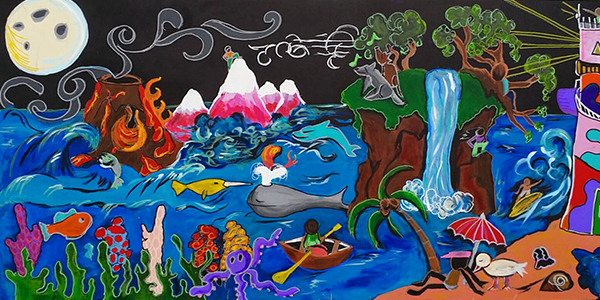
Exploring Earth’s treasures

Photos and content were originally posted on Daneytt Tucker’s blog “Daj’zha Vu” here and here.
This fall, Young Audiences visual artist Danyett Tucker worked with John Hanson Montessori middle school students to create a mural that now brightens their school hallway.
The theme for the eight, two- by four-foot wood panels is “Earth’s Treasures.” Danyett explains how the project began:
“I Googled “earth’s treasures” and found [the poem] ‘A Lunar Lament’ by Ann Pedtke. After I read the poem to the class for inspiration, I asked them to imagine that they were the moon looking down upon the earth, marveling at its treasures. What treasures would make you a jealous moon? They came up with some great sketches, which I pieced together into our mural composition, all from the moon’s perspective.”

The four week-long residency was a powerful experience for all involved. Danyett writes, “I am so proud of the students at John Hanson Montessori. They are creative, focused, and fun! They made me feel like a part of their family.”
Read more about this residency (and see photos from all stages of the project!) on Daneytt’s blog “Daj’zha Vu” here and here.

Meet our artists: Mark Lohr
Young Audiences’ roster of artists continues to grow to encompass new artists, ensembles, and art forms, from slam poets to improvisers to Capoeira masters.
We’ll be regularly posting interviews with our artists, giving them a chance to share more about themselves and their experiences bringing their Young Audiences programs to schools.
How did you hear about Young Audiences? What made you decide to become a roster artist?
I started my apprenticeship with Theatricks Theatre Company, where my performing mentor had a show as a Young Audiences roster artist. I took a break from performing for a bit, and when I decided to come back I immediately thought of Young Audiences as a great organization to work with because of my past experience. I have been on the roster for about 10 years now.
Can you tell us a little bit about your art form?
My art form is Vaudeville-style physical comedy. During the performances, I interact with the audience nonverbally and become a combination of circus clown, comic actor, juggler, and magician.
The creation of vaudeville is such an influential time in our history. Entertainment was revolutionized for the vaudeville stage, and technologies were invented to make shows more impressive using special effects, lighting, and more. We don’t have an opportunity to see that style of slapstick, nonverbal comedy anymore.
How do the lessons and skills you teach students through your art form apply to their everyday lives outside of the classroom?
During a vaudeville performance, students have to listen more with their eyes than ears. They have to interpret what my character is communicate without words and respond accordingly. Sitting there and taking it in with all their senses gets them involved. In a typical theatrical performance, there is a “fourth wall.” There is a performance or show, but the audience is on the other side of that fourth wall so there is no interaction. I put the wall behind the audience so each performance is a new experience–you never know what you’re going to get with each crowd that comes in.

The performance becomes a shared memory for students. It’s multi-cultural and multi-generational entertainment. You bring a school together with a performance where they laugh and have a great time. They share that wonderful memory, and can relate to each other more because of it.
Why do you believe theater is important for every student to have access to?
Vaudeville is such an important era in our history that we shouldn’t forget. It has a great significance in our culture today. Television shows like “America’s Got Talent” and “The Voice” follow in the tradition of vaudeville.
But a live performance is so important because, all too often, many students’ primary performance venue is a television or movie theater. There is nothing wrong with these things, but when you go to a live performance you’re immersed and surrounded by it so that you become a part of it. I feel that it is my job to reach out to schools and students who may never have the opportunity to see a live professional performance. In our education, it’s extremely important to give students that experience.
How does your art form help connect students to what they are learning in school?
“Hooked on Books” is my reading program where the audience has to listen and develop a response to everything I do. The main lesson I want them to walk away with is that books are more than stories, they are also gateways to new skills! I also share that it is OK to experience failure because to learn a new skill you have fail. The idea that failure isn’t a bad thing, but a part of the process, is a wonderful lesson.
What has been the most memorable part of the programs you’ve brought to students with Young Audiences?
From a performance standpoint, to be able to engage these students and have them become a part of my performance is a wonderful gift to me, and it’s my gift to them. They are laughing, responding to what I’m doing, enjoying the moment, and not thinking about what’s going to happen in the next hour.
In my residency, “America’s Got Vaudeville,” I talk about the significance of vaudeville and teach its skills and comic techniques. Our goal is to put on a show at the end. When I see there is a student who sits out in the corner not quite fitting in, I can reach out to them and teach him or her juggling or plate-spinning, and see his or her whole person change. They discover they have a new talent and skill and can share it with their classmates. Their peers begin to see each other in a different light and overcome social and cultural boundaries. They share a common bond. The look on students’ faces when they succeed in a new skill for the first time is a huge reward for me.
What is the most rewarding aspect of being a Young Audiences roster artist?
Young Audiences gives me the opportunity to share gifts that were given to me. My mentor gave me this knowledge with the one caveat of having to share it. It’s so important for me to have different venues where I can go out and give it away, and can see people walking away with a piece of the gift that was given to me. It impacts people’s lives, and I’m grateful that Young Audiences allows me to do that.
Learn more about Mark Lohr’s offerings through Young Audiences.
Keep an eye out for more artist interviews! See all artist interviews to-date here.
Drawing it out
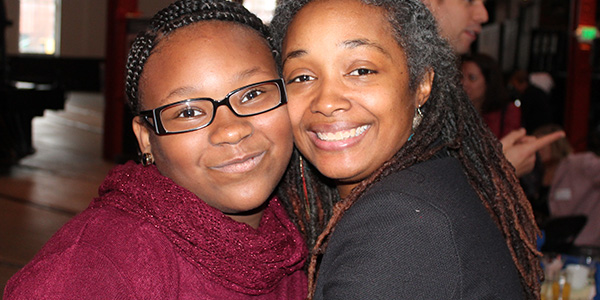
By Cyan McMillian, seventh-grade student, Windsor Hills Elementary/Middle
My name is Cyan McMillian and I am a seventh grader at Windsor Hills. I’d rather throw a football than paint my nails (seriously). I felt like a free spirit until my tenth birthday–which was the worst day ever. I was excited but made the mistake of not bringing enough cupcakes for the whole class. One girl–the drama queen–decided to take out her frustrations on me. She waited until we got in the cafeteria and took a mixture of yogurt, milk, juice, and water and poured it over my head in front of everyone. On my birthday! Everyone who saw it laughed. Even the adults. I was so hurt and embarrassed that I ran out of the cafeteria in tears.
I never wanted any friends after that. The more I tried to be myself the more I would get picked on. Bullies targeted me for all the ways that I was different–my weight, my clothes, and my love for school.
My parents signed me up for the Baltimore City summer learning academy, the summer before middle school started. I like math and science, but I was most interested in the art classes provided by Young Audiences. See, I don’t get to enjoy the liberties of art during the school year. Having art every day during the summer was a treat because I got to make new friends, I learned how to use the color wheel, how to make 2D pictures become 3D pictures.

Watch Cyan share her story at Young Audiences’ Impact Breakfast event earlier this month!
My art class was taught by Young Audiences teaching artist, Danyett Tucker. She played a song by Lauryn Hill called “Everything is Everything,” and asked us to illustrate what the lyrics meant to us. I love that song. It was like math because my hands and brain were working at the same time to solve a problem. I was able to express myself without being judged in a way that was fun and challenging. I learned from Ms. D that there is no “right” or “wrong” when it comes to art.
Ms. D believed in me and gave me the confidence to believe in myself. She let me come to her when I needed someone to talk to and gave me helpful advice when I was stuck. I was free to be who I am again, which made me feel like my old happy-go-lucky free-spirited self.
Ms. D inspired me to keep drawing after the program was over. My dad loves to draw and after that summer we started drawing together. When I found out the summer program was going to happen again this summer, I found out where Ms. D was teaching and signed up. This summer was even better because not only did I get art with Ms. D, other artists also helped teach the science and math classes. I learned how ratios relate to music and how dance movements connect with science.
In Ms. D’s class, we created a mural that’s displayed here today illustrating Maya Angelou’s poem, “A Brave and Startling Truth.” The poem was confusing at first but the more we read it as a class it became easier to understand and inspired me to speak out about the positive and negative things that happen around me. I was able to use my voice through illustration again. I attended this program every single day and now I have two murals in my portfolio.

Now when I feel like I have something to express but don’t know how to say it, I draw it out. Thanks to Young Audiences, I have learned a lot about myself. I’m more observant and I know what a real friend is. I know who I am. So what if I’m not a girly girl, I’m fast and I can handle my business. When they call my clothes trashy, I don’t let it bother me because their shiny white sneakers always end up dirty in a few days. And when they talk about my weight, like the song “All About That Bass” says: “Every inch of me is perfect from the bottom to the top!”
Last year I had the highest grade point average in middle school and it is still sky-high. I have a scholarship to any college that I want. I plan to get a PhD and work for NASA. Thanks to the support of my family, a few good friends, and the Young Audiences artists who understand me like a parent would, I am going for my dreams. And while the summer program is over, what I learned from Ms. D, that “Everything is Everything,” will stay with me forever. What that means to me is that if you want to be something and you work hard, you will most likely become that. So keep an eye out for me.
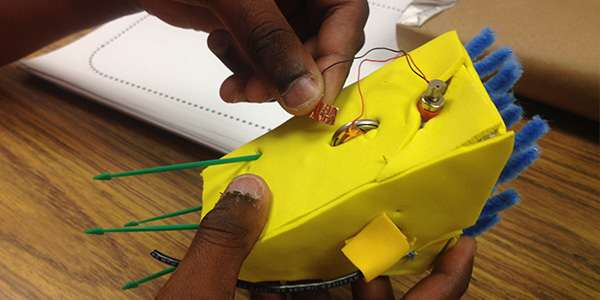
Meet our new artists: FutureMakers
During the last two years, our roster has grown in size to encompass new artists, ensembles, and art forms. From slam poets to improvisers to Capoeira masters, these new artists are undeniably unique.
To introduce audiences to our new artists, we’ll be posting interviews with those who recently joined our roster, giving them a chance to share more about themselves and their experiences with Young Audiences so far. We recently sat down with Matt Barinholtz of FutureMakers.
What is your background as an artist?
FutureMakers started from work I was doing as a visual artist and sculptor with other makers and educators. I was frequently asked if I could bring the type of work I was doing to classrooms. I had met artists, engineers, and technologists that wanted to do projects with young people, but didn’t feel confident about how to approach it. I wondered if an organization could connect makers and educators, so both could build their skills.
During the summer of 2012, I was invited to work with a supportive cohort of community colleges in Maryland to bring STEAM workshops (Science, Technology, Engineering, Arts, Mathematics) into their summer programs for youth. Since then, we’ve steadily been growing our staff, or as we call them, coaches, and are excited to be working with Young Audiences to provide a formal pathway for those interested in joining FutureMakers to deliver programs to schools.
How did you hear about Young Audiences?
Someone shared a workshop offered by Pat Cruz, Young Audiences Education Director. I wasn’t able to attend, but reached out to Pat to find out how FutureMakers could learn from and work with Young Audiences. In 2013, we were invited to support a summer learning program in Harford County, and participate in the Teaching Artist Institute (TAI) Seminar. Through TAI, we developed a FutureMakers residency. We’ve been making things that wiggle, draw, glow, and do crazy stuff with kids ever since.

See these sculptures in action here!
What has been the most memorable part of the programs you’ve had through Young Audiences?
I was watching morning announcement videos at a school which used puppets created by students with TAI instructor and playwright John Morogiello. They were funny and sharp. It wasn’t about adults, it was about youth development with young people out in front. I was impressed by the way art was completely integrated into that school. It made me wish that more places would work and integrate this way.
What was your favorite part of the Teaching Artist Institute (TAI) Seminar? How has the experience changed your approach to teaching?
TAI solidified the way we at FutureMakers think about the pathway our coaches follow. It focuses our expertise and creativity on student engagement, measurable outcomes, and addresses the needs of our teacher partners. They get to see and do what they’d like within boundaries of what they need to do.
Our coaches are experiencing how maker education can connect in classrooms because of Young Audiences. Being observed, receiving feedback, and having scheduling and communications support is an enormous value that Young Audiences adds to our organization.
What does your art form–particularly as it relates to STEM subjects–teach students?
With technology, things are moving toward additive processes – for example, 3D printing, which is a process we incorporate in many community workshops. Traditional craft and art media are now expanding to incorporate materials often found in science or technology classrooms, or only available to higher education students. In a rapidly evolving, project-based learning world, coaches help young people embrace the design process in their creative lives – think like engineers to figure out how to solve a design challenge, and have the confidence to iterate, or try again, when things go in unexpected directions.
How do the lessons or skills you teach students apply to their everyday life outside of the classroom?
Students asking, imagining, planning, creating, and improving is the core of what we’re about. Young people have limitless imaginations, and are open to learning how to take a step back and ask questions. In the past, young makers followed plans or prescriptive examples to complete a project. We’re learning that truly effective coaches facilitate their discovery of paths and options that lead to mastery – supported by the design cycle.
Why do you believe art is important for every student to have access to?
Young people need to have the opportunity to try something and fail, and a coach who can help them through difficult spots. Art was the only thing that kept me focused and motivated in high school; it was my identity early on. When we’re working with students in upper-elementary and middle school, identity is a large and important part of what our residencies are about. Art is a fast path to forming and grabbing onto an identity, whatever the content is.
What is the most rewarding aspect of being a Young Audiences roster artist?
It’s incredibly validating to know as an organization we’re doing something that our school systems embrace. I think the most rewarding aspect is knowing that we’re working in a community of other practitioners who are phenomenal performing and visual artists and amazing coaches. That is a very rare mix, and we’re honored to be a part of it.
Learn more about FutureMakers’ offerings through Young Audiences.
Keep an eye out for more interviews featuring our newest roster artists! See past new artist interviews here.
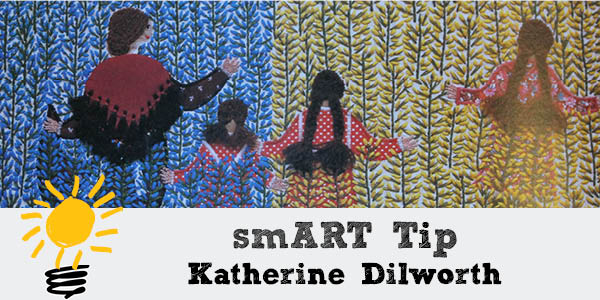
November smART Tip from Katherine Dilworth
History and social studies curriculum can include subjects that are difficult to address. The brutality of past atrocities, such as the Holocaust and genocide in Rwanda, can be difficult for students to comprehend. In this month’s smART Tip, Young Audiences visual artist Katherine Dilworth explains how the art of felting and other visual arts can be a helpful entry point for students when dealing with difficult and emotional subject matter.
[youtube http://youtu.be/0ximBeqQ3Mo?list=PLUssR-3GtBZfiKXpU72zQAkgXh3wBcBzQ]
smART Tips is a monthly video series sharing tips for educators who are interested in new, creative ways to use the arts in their classroom with students. See all smART Tips to date here. Interested in a specific topic? Let us know!