


Blog
Professional Development Should Engage Educators like the Learners They Are
Written by Stacie Sanders Evans,
President & CEO of Arts for Learning Maryland
Arts for Learning Maryland provides a hands-on professional learning experience for teachers to transform math and literacy learning into something active, hands-on, and creative–through arts-integrated learning.
With ever-changing trends and demands in education, sometimes educators find themselves in professional development that happens to them rather than with them. The need to cover a great deal of material in a short amount of time can lead to PD workshops that are too generalized and content-heavy–these workshops can feel more burdensome than exciting for already stressed teachers.
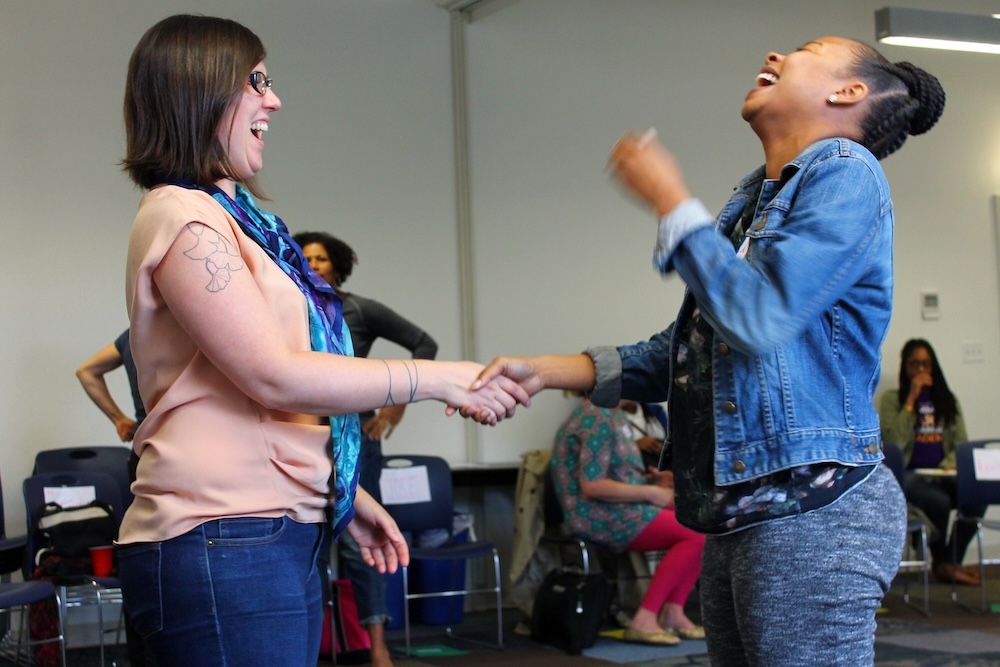
In Baltimore, we’ve found a way to engage educators in professional development that is collaborative, interactive, and based on the needs and interests of participants. We design learning experiences similar to how we approach student learning. Our workshops are hands-on and experiential–a balance of content delivery and opportunities to make connections, reflect, express, and share. We always infuse the arts to facilitate community building and personal and professional growth. The results have been overwhelmingly positive, revealing a truth that seems obvious: teachers are learners too. We need to engage them in the ways we know students thrive while setting a foundation for their ideas to flourish and develop.
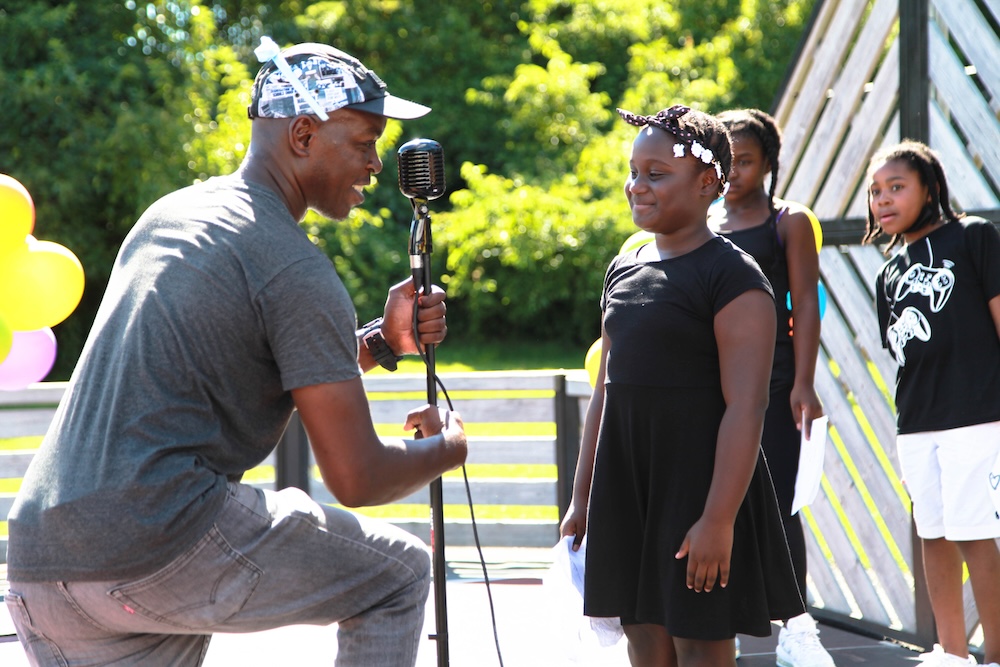
For Arts for Learning Maryland, we identified this truth through our work with students that integrates the arts into year-round learning. Arts for Learning places teaching artists in classrooms to collaborate with teachers and transform traditional education like math and literacy into something active, hands-on, and creative. We reached more than 140,000 students in 21 Maryland counties last year.
Having done this work for over 75 years, we’ve discovered what works for students. Instead of memorizing math fractions from the whiteboard, our students write and perform rhymes that draw on their understanding of fractions while expressing who they are. Instead of reading large chunks of text and raising hands to answer questions or completing a worksheet, students perform plays and create paintings that illustrate a story’s rising action or theme. We believe learning this way leads students to better grasp the content, retain it longer, and apply it better as they move in the world.
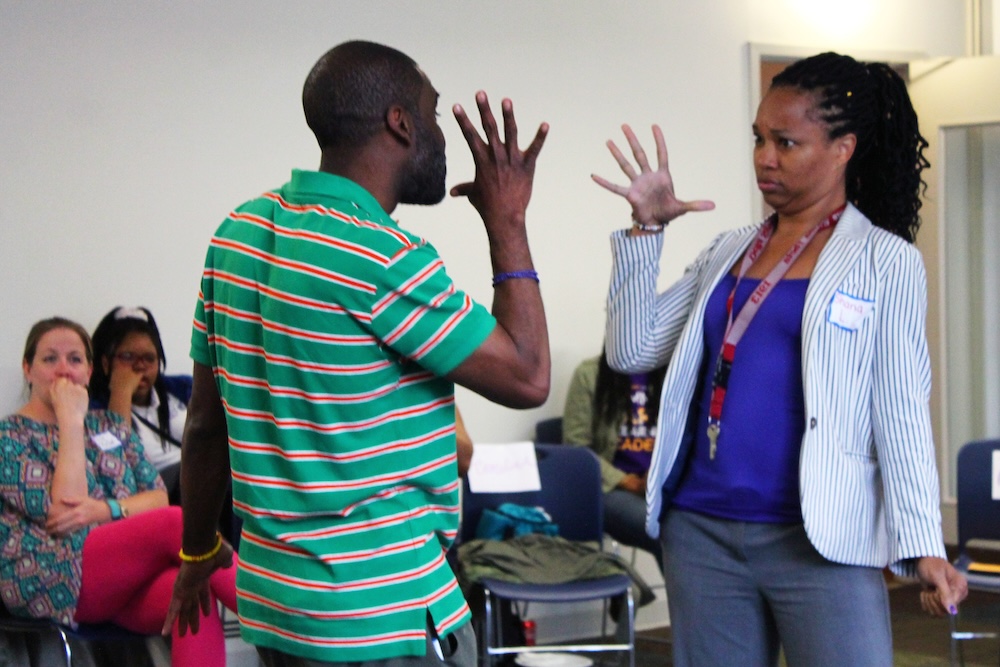
The research and feedback from teachers supports what we’ve found: students learn more effectively when actively engaging with the content they are learning. They feel a sense of empowerment, familiarity with risk-taking, and a willingness to be themselves–all of which are crucial components of a healthy, successful learning environment.
If creativity, the opportunity to explore, and the safety to take risks and experiment works for young learners, then why not give adults the same experience?
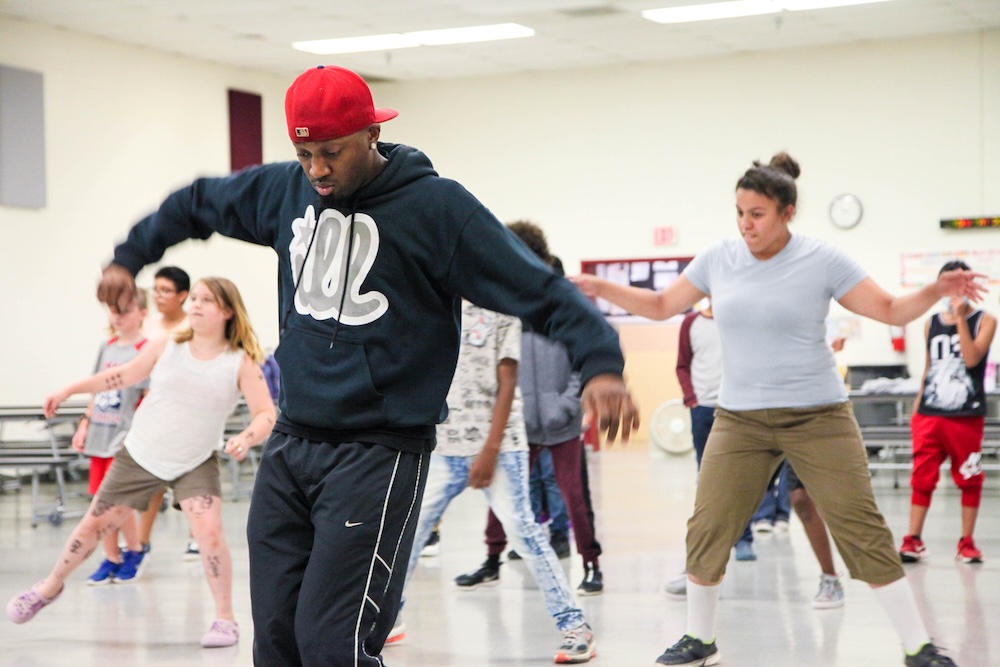
In the last five years, we’ve reached over 1,000 educators and artists with hands-on professional development. Instead of being passive learners, our teachers are creating. They are designing and writing postcards to their students, modeling elements of visual art and the friendly letter format. And our principals are designing and writing visual art pieces, like wish banners, to frame out their upcoming school year–wish banners that also reflect elements of visual arts and communicate their hopes and dreams.
Educators are not only able to explore and collaborate on new approaches, but they can also test them in real settings. Teachers and artists collaborate to create lesson plans in our PD–and they deliver them to students over the summer at Summer Arts for Learning Academy (SALA)–a free, five-week arts-integrated learning program for 2,200 Baltimore City Public School students. The teacher experience culminates with feedback and an opportunity to refine, improve, and try again. By the time the school year begins, these teachers feel confident and excited to introduce new approaches to teaching.
Just as important, our flexibly structured professional development experiences encourage an environment filled with laughter, storytelling, active expression, and acceptance. Traditional presentations requesting silence are replaced with thought-provoking questions and performative, creative elaborations. Note-taking is supplemented with drawing, performing, and singing. It works for students; it works for adults.
Feedback from educators and students, as well as our analyses of the program, show that we’re onto something. SALA has been shown to help stem summer learning loss, and teachers have reported transformations of their teaching style (and student responses to their teaching) as a result of our professional development.
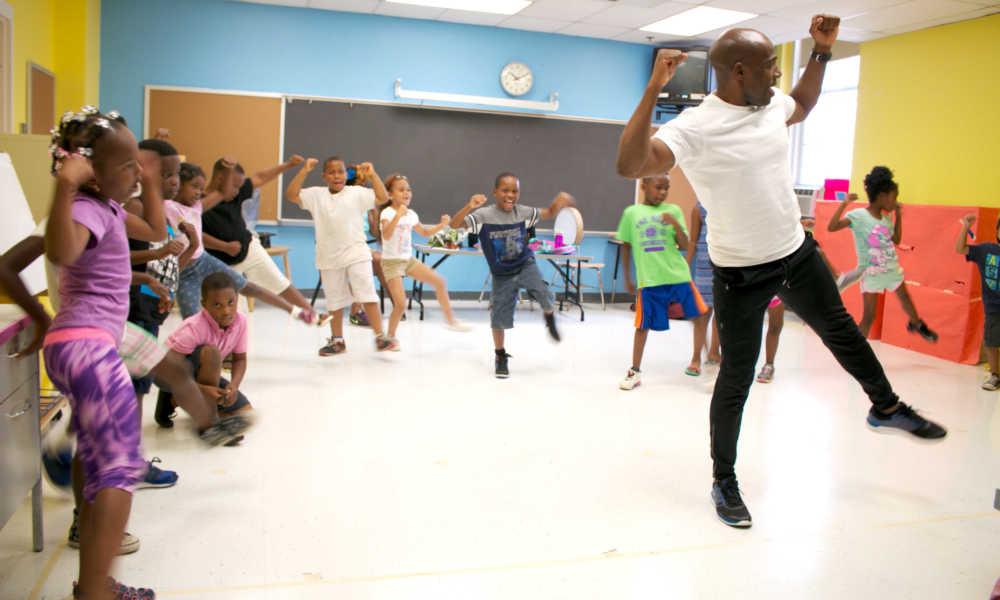
For us, it all comes back to how human beings learn most effectively. The approach to educating educators should be the same as with students. It should encourage expression, risk taking, and passion chasing while presenting practical opportunities to apply what is being learned.
There is an exponential impact of equipping educators with the approaches necessary to infuse traditional learning with the arts. The hundreds of educators and artists we reach a year with our professional development go on to inspire and motivate hundreds of students–students who may now have access to the arts at a level they never did. As a result, more children in Maryland are experiencing an education where discoveries are commonplace, where creativity is everywhere, and where learning is lasting.
Explore our professional development offerings.
This post originally appeared in on Next Generation Learning Challenges (NGLC) website. It has been updated to reflect current data, our name change from Young Audiences of Maryland to Arts for Learning Maryland in 2021, and roster artist programs.
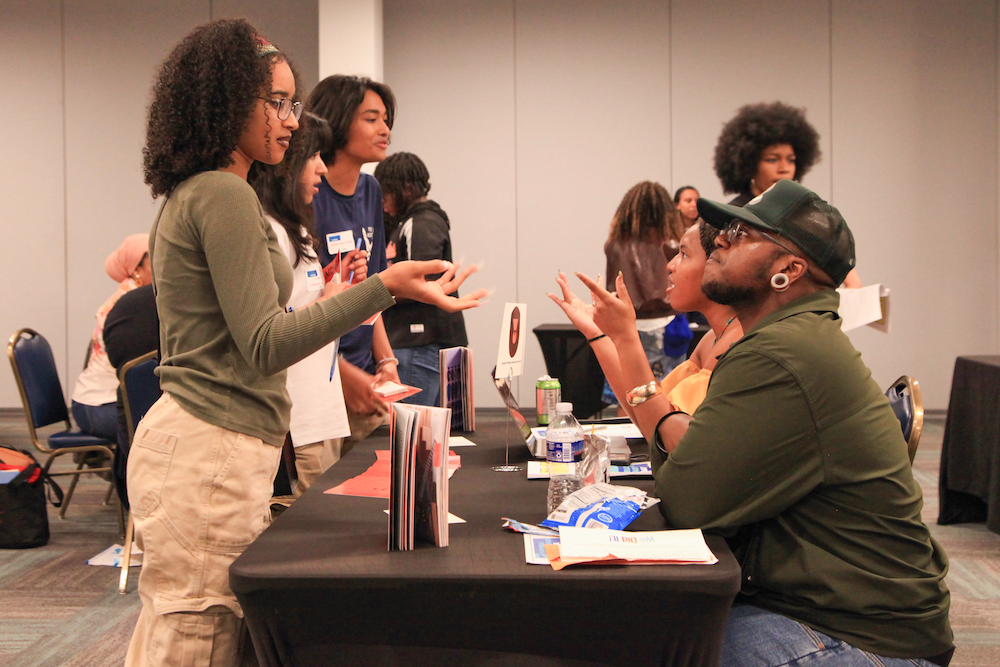
The Bloomberg Arts Internship: Our 2026 Worksites
Since 2017, the Bloomberg Arts Internship (BAI) has helped rising high school seniors in Baltimore City Public Schools explore careers in the arts by matching them with the city’s premier arts and cultural institutions. The program places students in paid, meaningful internships at these organizations and provides college and career mentorship. At their worksites, interns could be responsible for anything from product design and merchandising, graphic design and marketing, to curriculum development, or museum collection archiving!
This year’s interns will learn that it takes talented individuals from a variety of backgrounds and skill sets working behind the scenes to create what the public experiences. The seven-week program, now in its 11th year in Baltimore, runs from June 29 to August 14 this summer, with 69 interns working with 39 organizations.
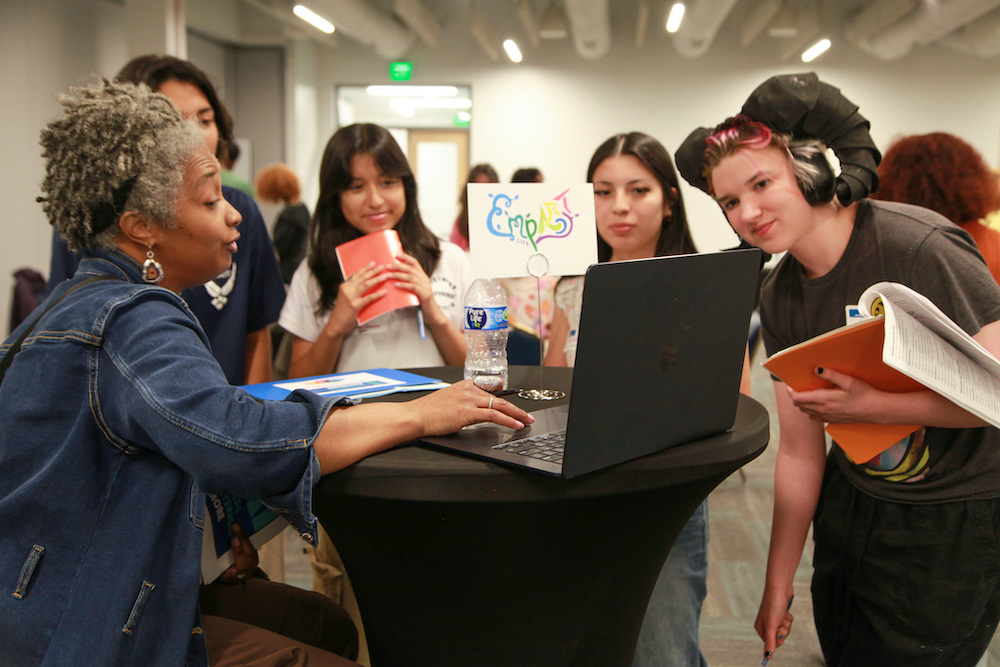
Students aren’t just randomly placed with worksites. Rather, future interns and representatives from each arts and cultural organization get to know each other through an annual matching event. The event works much like speed dating, with students sharing their strengths and interests and asking questions. They are encouraged not to focus so much on finding their perfect match, but to remain open to new experiences and learn about all the opportunities available to them.
Case in point: John Tyler, BAI 2017. John is a musician and had his heart set on matching with the Baltimore Symphony Orchestra. As the alumnus explains, he was sorely disappointed when he was, instead, matched with Maryland Public Television. Turns out, his internship at MPT that summer would launch John into a career of scoring films, commercials, and television; founding and producing an annual music festival; and winning an Emmy!
We are thrilled to announce the worksite partners for the 2026 Bloomberg Arts Internship in Baltimore:
AREA 405- under Central Baltimore Partnership
Art with a Heart
Arts Collective*
Arts Education in Maryland Schools
Ascend through Music
B&O Railroad Museum*
Ballet After Dark, Inc.*
Baltimore Arts Realty Corporation
Baltimore Center Stage
Baltimore Clayworks
Baltimore Improv Group
Baltimore Jewelry Center
Baltimore Times*
Chesapeake Shakespeare Company
Creative Alliance
Dance & Bmore
DIFFERENTREGARD*
Empact Art
Everyman Theatre
JHU Museums
Keswick Multi-Care Center*
Make Studio *
Maryland Art Place
Maryland Center for History and Culture
Maryland Volunteer Lawyers for the Arts*
Media Rhythm Institute
National Great Blacks in Wax
Opera Baltimore*
Peabody Institute Friedheim Library*
Peabody Preparatory
Port Discovery
Root Branch Media Group
The Baltimore Museum of Art
The Urban Oasis*
The Walters Art Museum
Valerie J. Maynard Foundation
Wide Angle Youth Media*
WombWork Productions, Inc
Yele LLC
* New or Returning from 2024 or Earlier
Start with the Art
In 2022, the U.S. Department of Education awarded Arts for Learning Maryland (A4L) the DOE Education Innovation and Research grant to conduct a multi-year research project to engage 2,500 students in Prince George’s County Public Schools (PGCPS) in Kindergarten through third grade. The project, titled Start with the Art, aimed to demonstrate that arts-integrated school programs can improve the academic performance and social emotional well-being of students. This month, we wrapped up our final rotation of lessons co-taught by teacher and artist pairs at Tayac Elementary School.
“Before, I was always frustrated and felt that students did not listen, but through the music, through the art, I can present information in a way that makes them excited.”
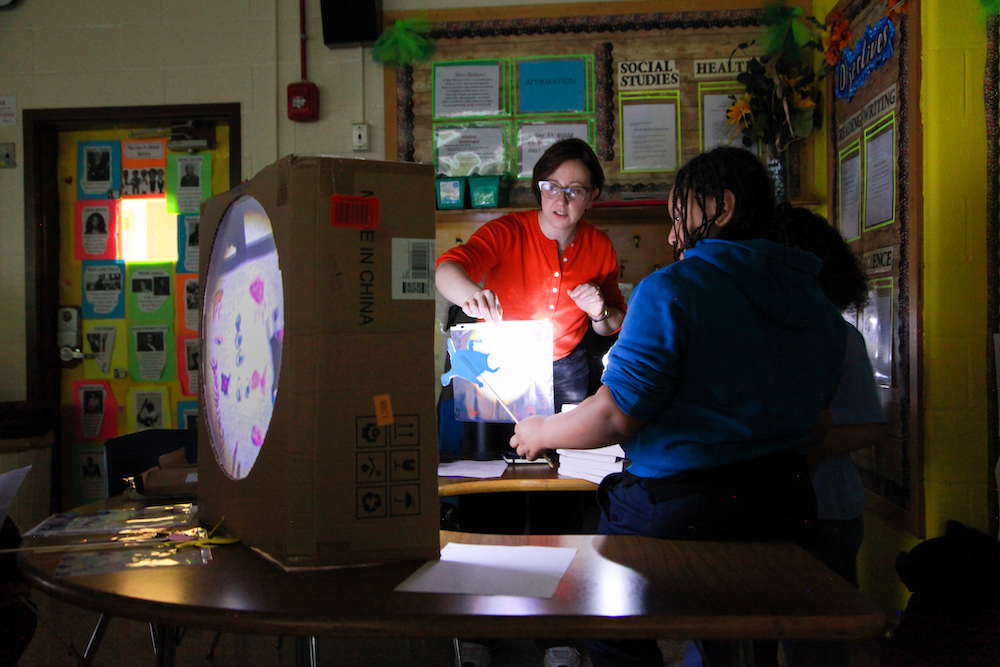
What does arts integration look like in a classroom? At Tayac Elementary, theatre artist Liza Yanovich shared the art of shadow puppetry with Mrs. Ordonez’s third-grade students. In her classroom, arts integration looked like children creating fictional characters inspired by non-fiction reading as shadow puppets, writing small-group scripts for their characters, and performing for classmates. It looked like fueling student innovation by supplying basic construction materials, markers, transparency film, and flashlights, and creating entire three-dimensional worlds, limited only by their imaginations. It looked like laughter and determination to bring to life what was pictured in their minds.
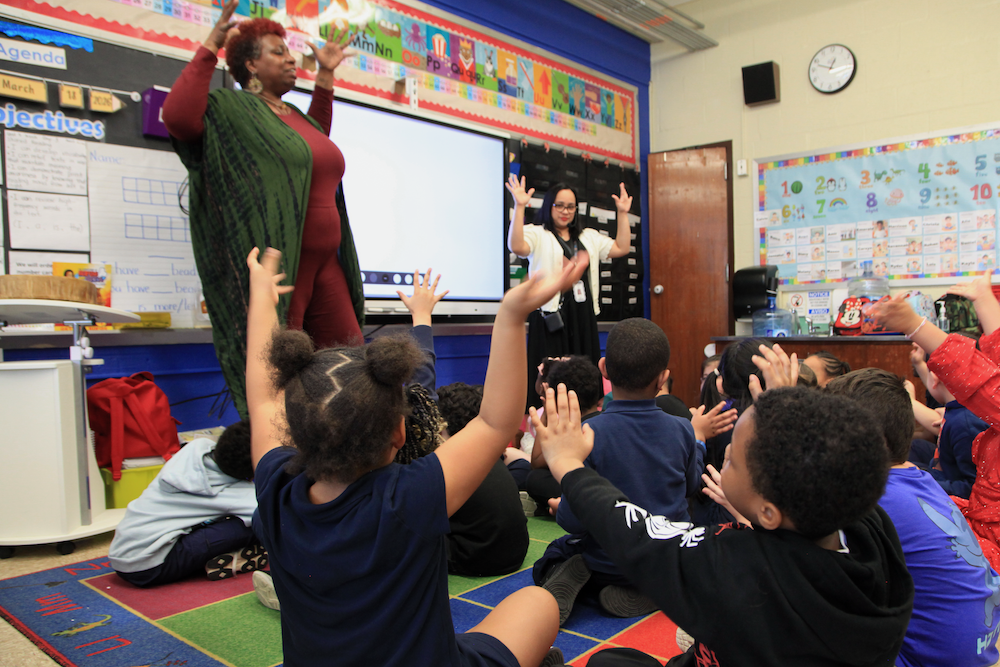
Nearby, the sounds of rhythmic counting, tapping, and clapping filled Ms. Asuncion’s Kindergarten classroom. She and teaching artist Ama Chandra Brown led a math lesson integrated with performing arts and music. Here, arts integration looked like confidence and pride as students “counted on” numbers between 10 and 19. The Kindergarteners first learned about steady beats and kept a rhythm through a number of body percussion methods. They then began composing and decomposing the numbers using a steady beat, eager to demonstrate and perform. Arts integration looked like participation and success. “I have seen growth in student engagement,” said Ms. Asuncion. “Before, I was always frustrated and felt that students did not listen, but through the music, through the art, I can present information in a way that makes them excited.”
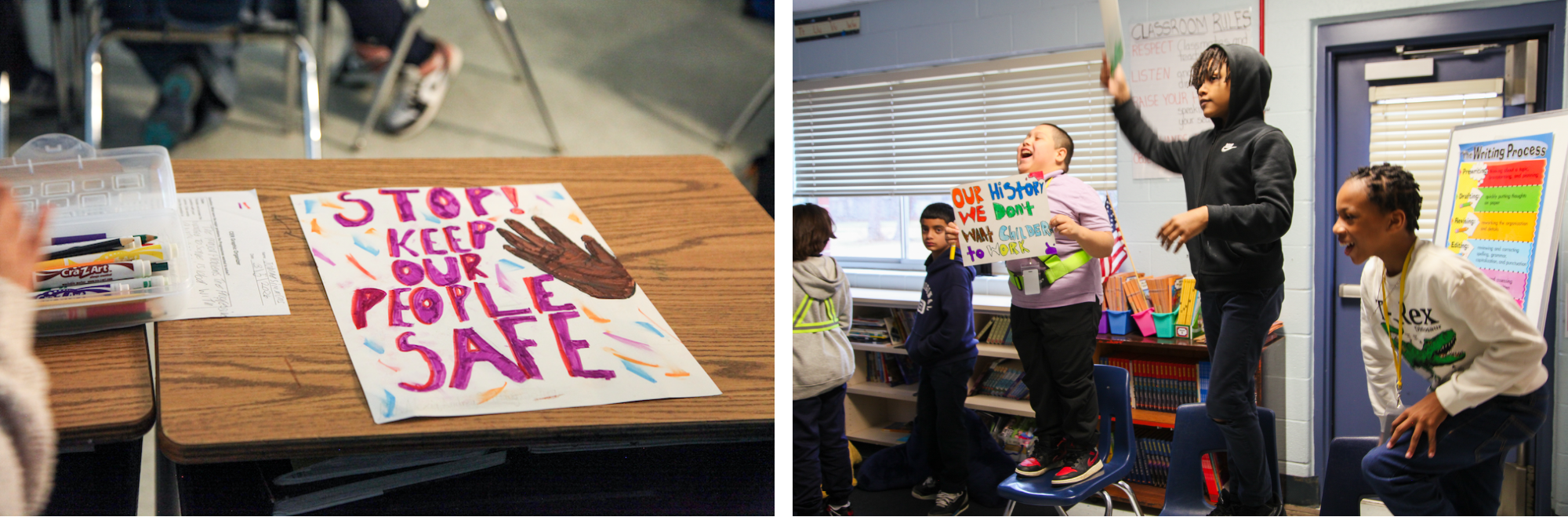
In Ms. Guevara’s fifth-grade class, arts integration looked like a stage for debate. Proponents of child labor in the early 1900s challenged advocates of stricter regulation and protection of children in the workforce. There were passionate voices on both sides of the aisle, and theatre artist Brandon Kanion stood in the center. Students held handmade signs expressing their positions on the issue as they engaged in a structured debate. Arts integration looked like learning through the embodiment of a historical moment from multiple perspectives. “Children need an education! They need to be in school!” one side declared. “Jobs give children practical experience that schools can’t provide!” countered the other. It looked like respect as the students allowed each other space and time to be heard without interruption. Afterward, the students, artist, and classroom teacher analyzed the arguments to determine who won the debate.
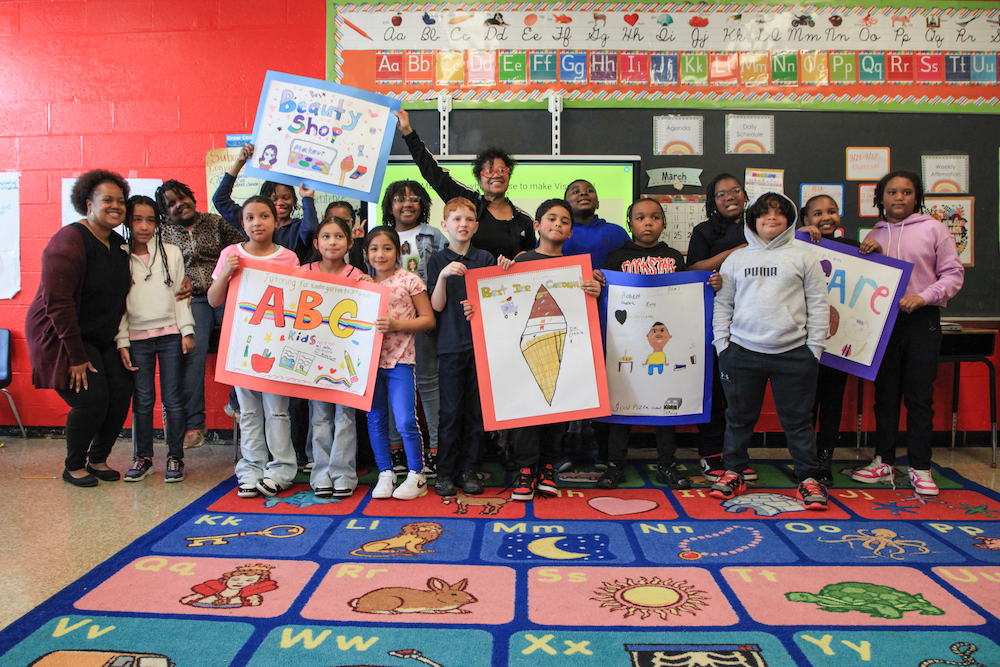
Mrs. Duckett’s third-graders donned entrepreneurial hats to market their own newly created businesses. Small groups of students worked with visual artist Maria Weaver to use elements of art in ways to best capture the attention of their audience. In this classroom, arts integration looked like marketing teams designing full-color posters to advertise businesses. They thoughtfully considered which messages were the most important to amplify about their new pizza parlors, pet care businesses, tutoring services, ice cream factories, and fashion boutiques. Arts Integration looked like making tough design choices and cooperation. Not everyone always agreed, but decisions had to be made to complete the final product. It also looked like copyediting and attention to detail. Spelling errors were not simply scratched out, they were transformed. “I want you to turn that mistake into a masterpiece,” Ms. Weaver told one group. And masterpieces, they made.
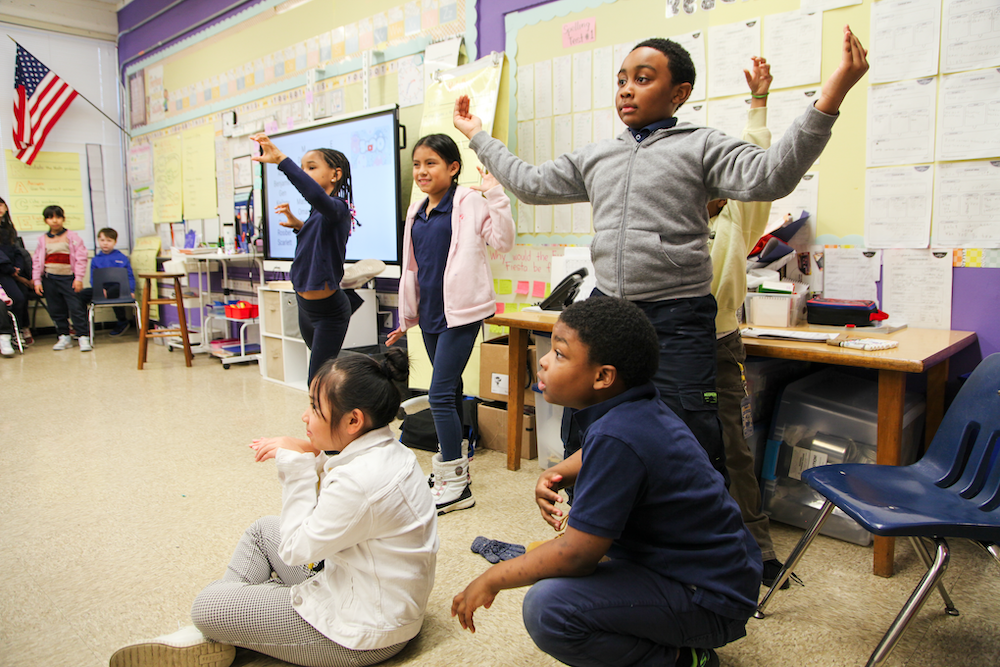
In Ms. Reyes’s second-grade class, reading the story Jack and the Beanstalk, arts integration looked like wide-eyed students, mouths agape in exaggerated gestures. “What does surprise look like?” theatre artist Julie Kurzava asked the class. “Show me your surprised faces!” Soon after, students pushed their desks to the middle of the room to create a large perimeter–just enough space for small groups to choose a scene from the story, position themselves at different levels–low, middle, and high– to create a tableau–a scene from the story, frozen in time. Arts integration looked like collaboration and cooperation as the students worked together to decide how to represent the characters and their emotions. And it looked like understanding as they analyzed the text to make sure what they wanted to convey was accurate.
“I learned that using your imagination makes things better.”
In Ms. Hernandez’s second-grade classroom, arts integration looked like a graphic design studio. Visual artist, Cortland Jones, reviewed the elements of design with the class, then tasked students with creating an original number wheel to use as a tool in their math lessons. They drew a circle, then divided it into 6 sections, each filled with a two-digit number. How they separated the circle was up to them, leading to unique design features. The young designers turned ordinary number wheels into pizzas, pumpkins, beach balls, and even a canteen. After they wrapped up, students took turns speaking about the experience. In this moment, arts integration looked like courage–public speaking is a skill that requires bravery and practice–but it also looked like brilliance and joy as one young designer shared, “I learned that using your imagination makes things better,” and another, the creator of a bunny-cat number wheel offered, “If you ever have a dream about being an artist, it will come true.”
As we await additional data from our assessment partners, we reflect on what we’ve already gained from this project. Arts integration has enabled us to build powerful relationships between PGCPS classroom teachers and teaching artists through lesson planning, co-teaching, and reflection on arts integration in the classroom. The project used different art forms to engage students, creating space for them to experience and regulate emotions. It also used students’ experiences of setbacks and failures in their artistic work to develop perseverance. It capitalized on collaborative work to foster positive peer relationships. Not to mention, arts integration made learning fun.
Interested in bringing arts-integrated learning to your school or district? Reach out to partnerships@artsforlearningmd.org.
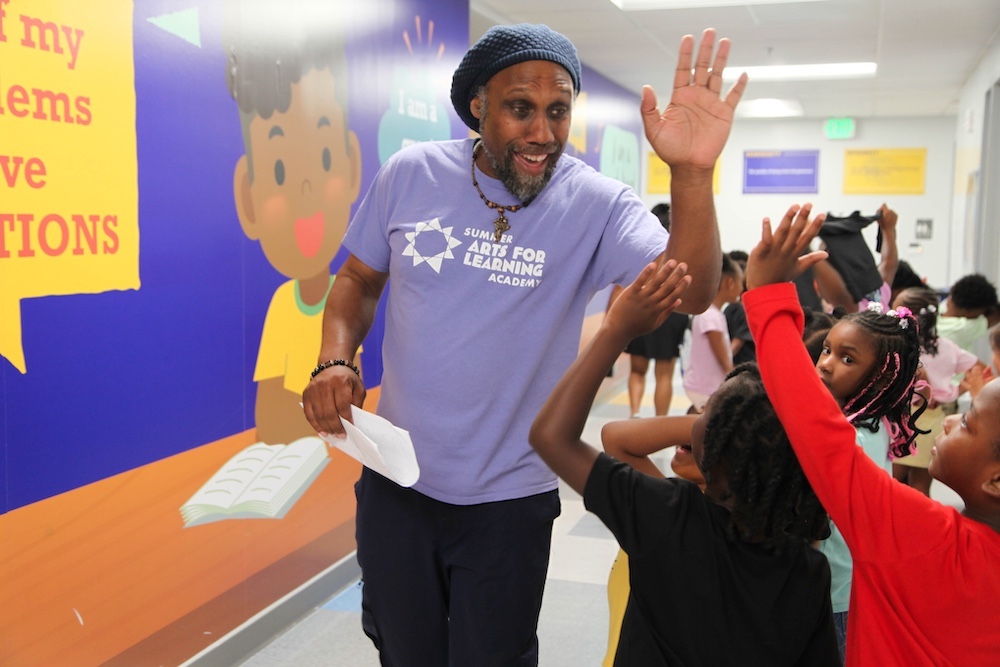
SALA: It Starts with Squad
It’s hot. It’s most definitely summer. But classrooms at 13 school sites around Baltimore City are full of students who could be doing anything from practicing multiplication tables through rap, to learning sign language and singing, or creating art that encompasses a particular educational standard in the style of a famous artist.
This is Summer Arts for Learning Academy (SALA), the free, 5-week summer program for students in PreK-5th grade at Title 1 Baltimore City Public Schools. Student artwork lines the hallways and hangs on the walls of literacy and math classrooms. You might hear singing or chanting. Drumming, painting, sculpting, dancing. You see movement and collaboration. These aren’t traditional classrooms.
At SALA, students learn through arts integration, a teaching method that uses an art form as a tool to teach subjects like math, social studies, science, or literacy. Here, students don’t just explore and practice new art forms—they use them to make meaning of what they’re learning in class. That makes the content stick. It becomes theirs.
But there’s something else that makes SALA special, too.
On a summer morning at SALA at Pimlico Elementary Middle School, a young student was called for early dismissal. The student gathered their belongings, turned to the class, and waved, “Bye, everybody! I’ll see you tomorrow!”
The class did not hesitate. “Bye! See you tomorrow!”
Site Director Matthew Owens smiled at the exchange and said, “That’s Squad.”
Squad is SALA’s version of CREW or Morning Meeting, taking place at the start of each and every day. It’s during this time that the class engages in Social Emotional Learning (SEL) practice and sets the tone for the day–the space to ground every day in love and understanding.
The teachers and teaching artists at SALA cultivate community. That’s the other quality that distinguishes a SALA classroom from a traditional classroom–the something else: community. Squad creates the space for building authentic and meaningful community, and for connecting on a human level.
No matter how a student’s day has started–or a teacher, artist, or staff member’s day–when someone walks through the doors to SALA, they know they are seen. They matter.
“We pride ourselves on affirming, empowering, and inspiring our students,” Mr. Owens explained. “We make sure they have a safe and nurturing space for them to thrive.”
And it starts with Squad.
Applications are live for SALA 2026! Apply today at artsforlearningmd.org/programs/ost/summer-arts-academy.
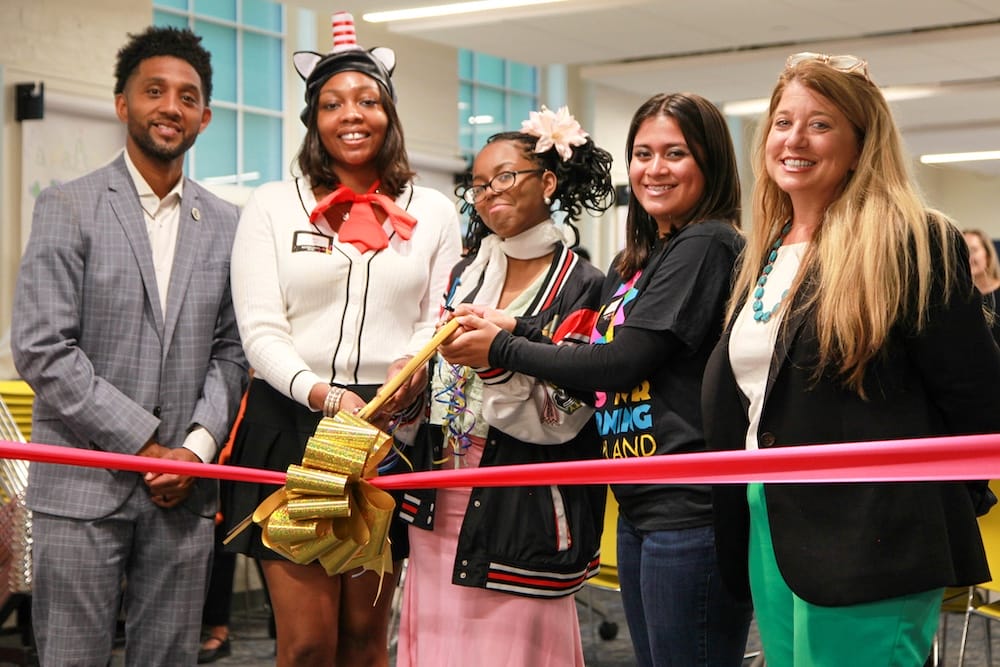
A New Classroom to Host an Expanded Cohort: The Bloomberg Arts Internship Welcomes 50 Students
Recently, Baltimore Mayor Brandon M. Scott joined students and staff in the newly completed classroom space at Arts for Learning Maryland headquarters to celebrate participants in the Bloomberg Arts Internship (BAI)–a program providing public high school students with paid internships at area arts and cultural institutions as well as professional career and college mentorship.
Mayor Scott spoke proudly of the value that BAI and similar programs, like Youthworks, contribute to the City, creating meaningful employment and learning opportunities for our young people. He joked that arts internships certainly beat his own summer employment as a teen, working in the Baltimore heat for his family’s roofing company.
The new classroom space–made possible through capital support from the Harry and Jeanette Weinberg Foundation, Abell Foundation, and France-Merrick Foundation–will host BAI this summer, as well as professional development workshops for teachers and artists throughout the year. 2025 marks the ninth year of the Bloomberg Arts Internship in Baltimore. This summer, 50 interns will be supporting arts and cultural organizations with projects ranging from marketing and community outreach, creating gallery installations, education for community programs, tackling documentation and archiving initiatives, creating props and designing sets for theatre productions, and so much more.
This year’s Bloomberg Arts Internship worksites include: AREA 405, Art with a Heart, Arts Education in Maryland Schools (AEMS), Arts Every Day, ArtsCentric, Baltimore Arts Realty Corporation, Baltimore Center Stage, Baltimore Clayworks, Baltimore Filmmakers Collective, Baltimore Improv Group, Baltimore Jewelry Center, Baltimore Museum of Art, Baltimore Rock Opera Society, Blue Light Junction, Chesapeake Shakespeare Company, Creative Alliance, Empact Art, Everyman Theatre, Johns Hopkins University Museums, Living Classrooms Ascend through Music, Maryland Art Place, Maryland Center for History & Culture, Media Rhythm Institute, National Great Blacks in Wax Museum, Peabody Preparatory, Port Discovery, Root Branch Media, Strand Theatre, Valerie J. Maynard Foundation, Walters Art Museum, WombWork Productions, and Yele LLC.
Follow BAI on Instagram to get a peek into the program, the work, and the experiences interns are engaged in this summer.
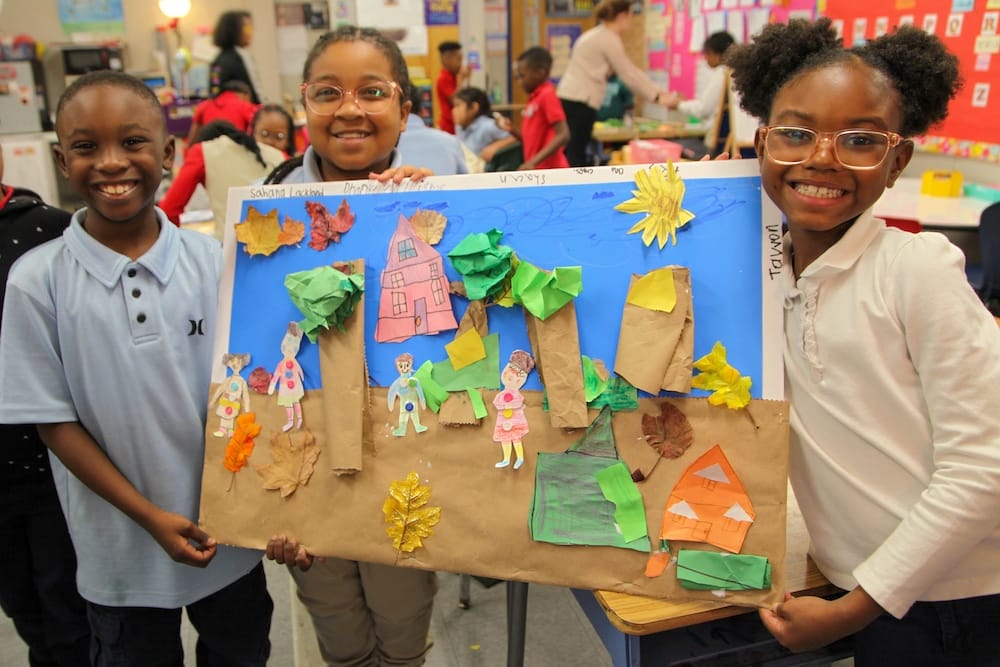
Baltimore City to Welcome Dream Academy Charter School, operated by Arts for Learning Maryland
A new charter school is coming to Baltimore City. Arts for Learning Maryland, in partnership with Thomas Jefferson Elementary/Middle School (TJEMS), will open Dream Academy Charter School for student enrollment in Fall 2026. The school will offer an arts-integrated learning model backed by ten years of consistent academic and social-emotional impact. Arts for Learning is the first new charter operator approved in ten years.
A nationally recognized nonprofit with roots in Baltimore since 1950, Arts for Learning (formerly Young Audiences of Maryland) serves students statewide with arts-integrated learning. With this new school, Arts for Learning will bring its data-driven model to life in a year-round academic setting. “We have seen this model work for students for over a decade in after-school and summer programs,” said Stacie Sanders Evans, President & CEO of Arts for Learning Maryland. “Finally, families will have the opportunity to learn this way all year round.”
Dream Academy will feature classrooms co-led by teachers and teaching artists. This unique approach, modeled for 10 years through national award-winning summer and after-school programs, has consistently improved literacy, math, attendance, and social-emotional outcomes for students, particularly those performing below grade level.
Dream Academy is not just about integrating the arts–it’s about transforming how we teach. It gives teachers the time, tools, and training to meet the diverse needs of our students. It gives students more ways to access learning, show what they know, and feel seen and successful.
TJEMS has worked with Arts for Learning since 2014, piloting arts-integrated programs. The proposal to convert the school into Dream Academy was developed in close collaboration with the community. Over 650 Baltimore families, students, educators, and artists were consulted. A 2022 survey showed overwhelming community support, with 97% of respondents agreeing that an Arts for Learning school is needed in Baltimore, and 86% indicating they would enroll their children. 90% of the TJEMS staff voted in support of the conversion.
The planned charter directly addresses critical needs outlined by Baltimore City Public Schools and the Maryland State Department of Education to address enrollment, attendance, and academic performance at TJEMS.
“Our school has real potential, and we’re ready for change,” says Adrienne Carter, parent of four TJEMS students. “Dream Academy is helping bring our vision to life. I’m proud that families and community members have a real voice, with seats on the board and [planning] events… We’re not just involved—we’re part of the Dream Team.”
The school staff share this sentiment.
“Dream Academy is not just about integrating the arts–it’s about transforming how we teach,” says TJEMS middle school teacher Dr. Yvette Freter, “It gives teachers the time, tools, and training to meet the diverse needs of our students. It gives students more ways to access learning, show what they know, and feel seen and successful.”
“It’s a dynamic academic innovation, based on research and experience, home-grown in Baltimore City for Baltimore City.”
To stay informed of enrollment details and community engagement opportunities, sign up for the Dream Academy mailing list and follow @DreamAcademy_TJEMS232 on social media.
Your Voice Matters Now More than Ever
From the desks of our President and Board Chair:
Dear Friends and Supporters,
At Arts for Learning, we believe in the power of the arts to inspire, educate, and transform lives, particularly for young people. We stand in solidarity with our colleagues at the National Endowment for the Arts (NEA) and the thousands of artists, educators, and organizations across the country who work tirelessly to strengthen our communities through creativity, cultural connection, and access to the arts.
For decades, the NEA has played a critical role in expanding opportunities for arts education and participation, particularly in under-resourced schools and communities. It has helped to ensure that every child, regardless of zip code, has the chance to learn, grow, and thrive through the arts.
The NEA has been a key partner to Arts for Learning in furthering statewide student access initiatives, like our “Rural Access for All” grants. They also support our Principal Fellowship program, which creates meaningful opportunities for Maryland principals to develop action plans that utilize the arts for school-wide improvements.
But today, that legacy is uncertain.
On Friday, the federal government announced an immediate revocation of grant dollars and dramatic cuts to federal funding that support vital artistic programs. Additionally, the proposed federal budget for 2026 eliminates the NEA entirely. These cuts will jeopardize the future of countless initiatives in our community and across our nation, including our own. Our young people will be most impacted by these decisions.
Your voice matters now more than ever. The national arts advocacy group Americans for the Arts is asking folks to:
- Contact your elected officials
- Complete a national survey (organizations + grantees)
- Share your story
Visit Americans For The Arts
We believe that every child deserves access to the life-changing power of the arts. With your help, we can ensure they continue to have that chance—this summer and for generations to come.
With gratitude and resolve,
Stacie Evans, President and CEO, Arts for Learning Maryland and Sheelagh Allston, Board Chair, Arts for Learning Maryland
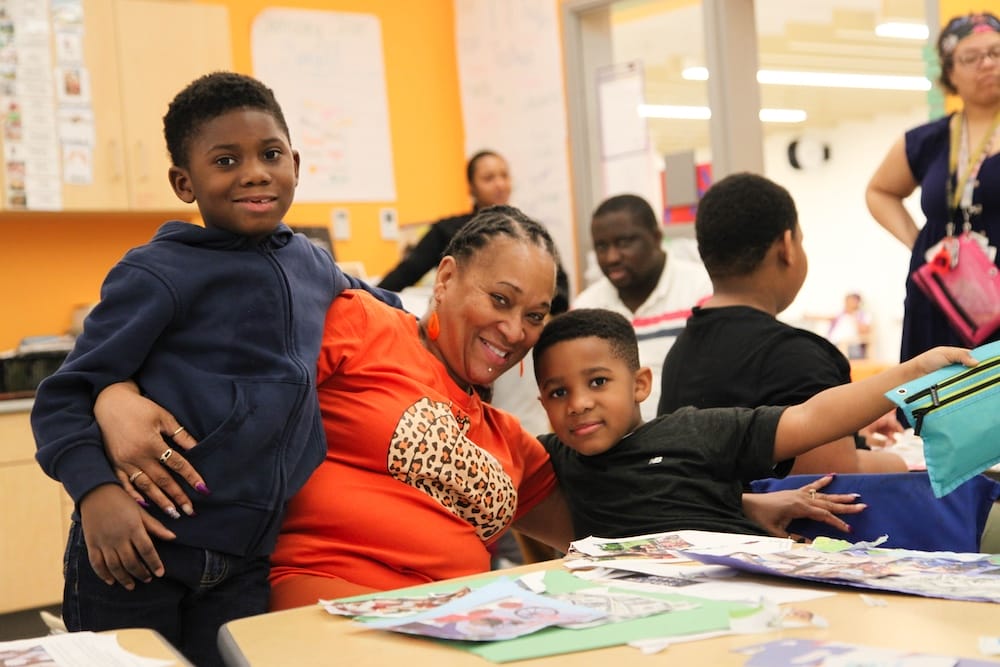
Family Engagement Nights at Your School
Does your school community need more family engagement? Partner with A4L to plan a dynamic family-focused evening of fun centered around a relevant curriculum area! Families will enjoy an easy-to-follow arts-infused demo lesson led by trained teaching artists. With dozens of programs to choose from, families might practice conflict resolution through improv theatre, explore environmental science through recycled instrument making, or even financial literacy through a musical! Parents take away effective, creative approaches to supporting student growth at home while having a blast and building community!
“The kids had so much fun and families had great feedback.”
–Teacher, Mary Ann Winterling Elementary
“I loved seeing the students clapping out the syllables and going back to their papers because their idea fit.”
–Literacy Coach, Harlem Park Elementary/Middle
Book a Family Engagement Night for your students by emailing k12programs@artsforlearningmd.org
Abrupt Federal Cuts to After School Programs: Our Response
Dear Friends and Supporters,
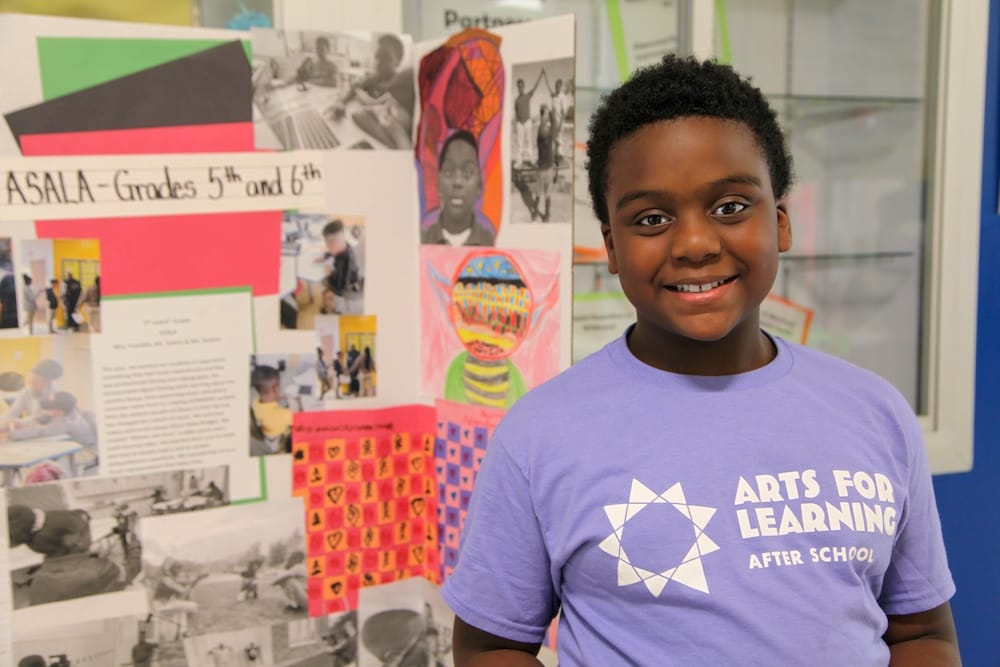
On Friday, we learned that–due to the US Department of Education’s decision to renege on previously approved pandemic-recovery funding–Baltimore City Schools was forced to abruptly cancel our After School Arts for Learning Academy (ASALA) at five schools. In addition to ASALA, 11 other after-school and tutoring programs, serving 65 schools across the city were canceled.
Thousands of students and families will be impacted.
Baltimore City Schools is as pained about this occurrence as we are. As the Baltimore Banner reports, the Federal Government is not just ending pandemic-recovery funding; they are refusing to reimburse school districts in Maryland for funds already spent or contractually committed. This places Baltimore City Schools immediately in $48 MILLION of debt.
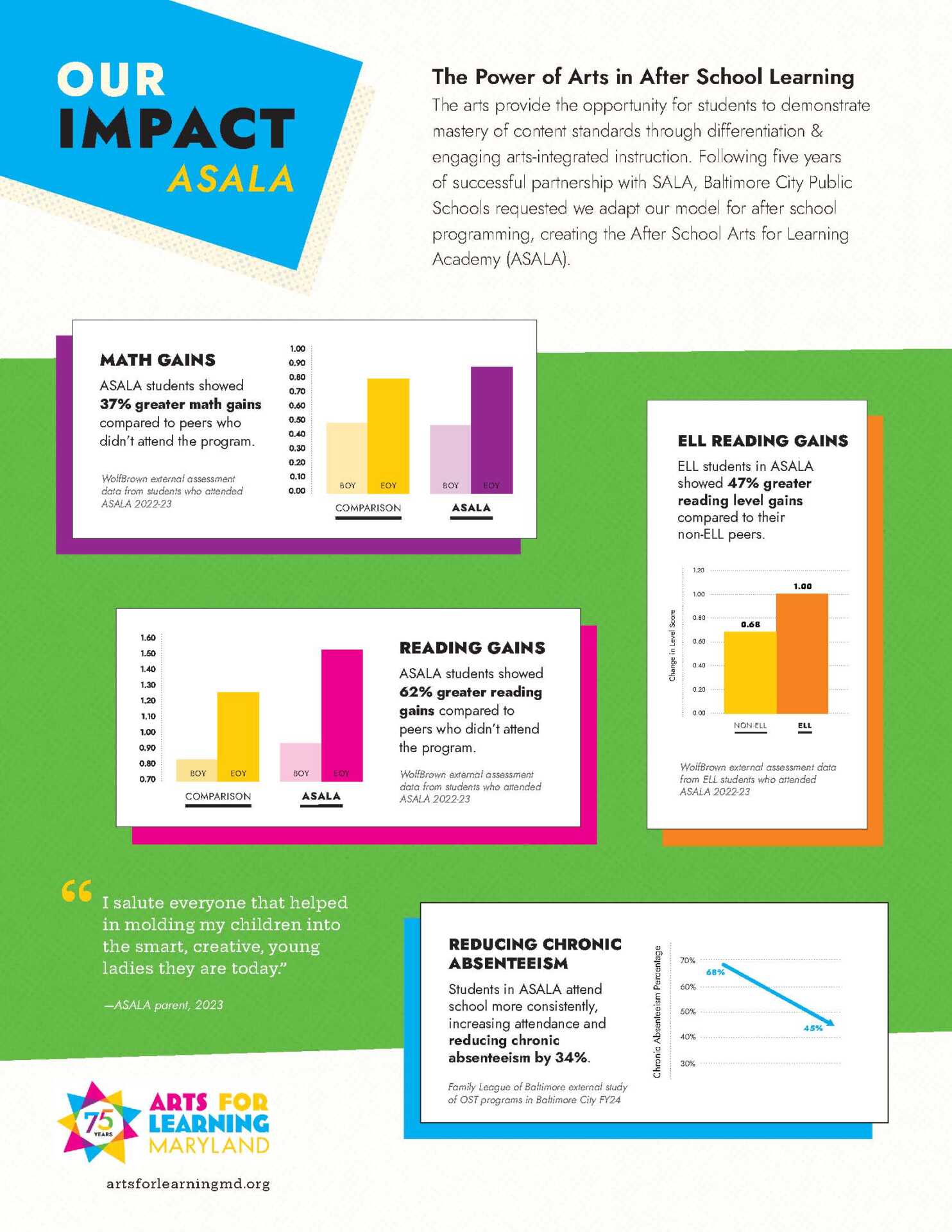
Cutting ASALA before the end of the school year will impact 539 students who benefit from the academic support. For us, this is particularly painful because our data clearly show how remarkable ASALA has been in reversing COVID learning loss for students who participate.
ASALA families depend on safe, engaging out-of-school-time care and educators and teaching artists rely on this work to pay their bills. For all of these reasons, and despite awareness that these cuts may be just the beginning of what may be coming down the pike, we have decided to use our own reserve funds to continue ASALA through mid-May.
A4L’s Board Executive Committee met Sunday to approve the continuation of a scaled-back program at the impacted sites: Arundel, Dorothy I. Height, Glenmount, Sinclair Lane, and Wildwood.
We are exploring how we can partner with impacted families, staff, and fellow after-school and nonprofit providers to raise awareness about how this Federal action is harming our community.


As always, Arts for Learning remains committed to Maryland students, artists, educators, and families. Our work is strengthened by our passionate community.
Stacie Sanders Evans, President & CEO
A message from our CEO…
This letter reaches you at a time when many things happening in our country threaten the work Arts for Learning does, how we do it, who has access to our programs, and in many cases, the people in our community.
Our commitment:
We at A4L remain vested in our commitment to serving children, fostering communities, and changing education. We do this through dedication, caring, and love—ensuring all in our community feel seen and valued, regardless of wealth, skin color, background, ability, sexual orientation, or gender identity. We remain, and will always be, committed to these principles. We hold them tight as we listen and learn from our folks on the ground doing the work in communities.
How at risk are the people we serve?
A4L impacts over 150,000 students annually, employing 60 full-time staff, and over 400 contractual teaching artists and educators. Much of our funding comes either directly or indirectly (through school contracts) from Federal grants. The recently proposed cuts to government funding and the dismantling of the US Dept of Education would dramatically affect our ability to serve Maryland students, particularly students in high-poverty communities. We rely on these funds to deliver award-winning, data-driven programs that support academic achievement through the arts, such as the Arts for Learning Academies (SALA and ASALA).
What do we know?
The arts transform lives, classroom learning, and student outcomes. We have evidence to back this up. This is because the arts foster creativity, connection, self-expression, understanding, and a greater sense of belonging for our young people. We need more of this in our world right now–not less. (see why)
What are we doing?
In response to executive orders threatening immigrants, we are arming staff and artists with information so they are better prepared to protect their rights and the rights of our students. Next week, we will bring together artists working with children impacted by the threat of ICE, to understand clearly how we can support teachers, principals, and their students.
Despite executive orders promoting an anti-DEI agenda, we continue to support artists and teachers to create classrooms grounded in identity, belonging, and love that celebrate the diversity of the communities we serve. We provide and participate in trainings that equip us to support our diverse community, including Black and brown communities and the LGBTQ+ community. After a significant decline in corporate sponsorships threatened our annual Blacktastic! A Virtual Festival of Maryland Black History + Culture–our board of directors stepped in to replace corporate dollars with their own, and found new sponsors with the courage to fill the gap. With their help, over 48,000 Maryland children are able to attend this festival next week.
Under threat of losing federal funding, we have committed to stay the course–finding alternate forms of funding to ensure artists remain employed, young people have equitable access to the arts, and schools can depend on us to enrich teaching and learning. This threat includes a four-year, $3.9M federally funded research grant for the largest data collection and evaluation of an arts integration intervention in our country’s history. Regardless of executive action, we will complete at least the third year. These findings could help shape the future of education.
How can you help? Learn what you can do now.
Thank you for the dedication and love you all share with us,
Stacie Sanders Evans, President & CEO
Blacktastic! 2025 – Black History Month Content like no other
This February, the fifth annual Blacktastic! returns, bigger and better than ever!
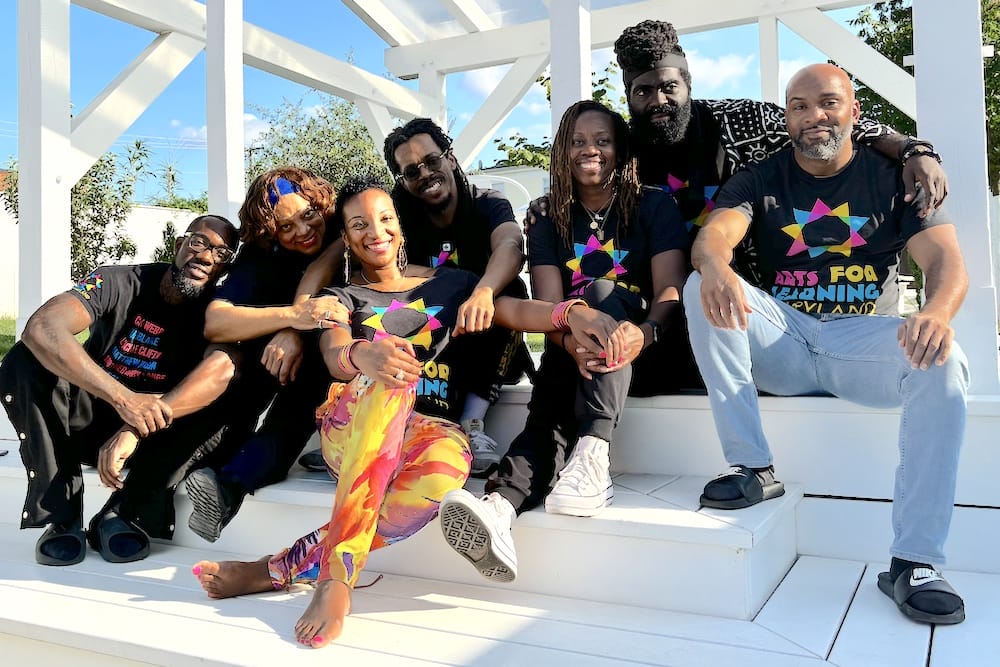
Looking for joyful, original, and exciting Black History Month programming? Join us in celebrating the joy of Maryland’s Black history and culture through Blacktastic! This extended virtual program features Arts for Learning’s teaching artists, enriching and developmentally appropriate virtual performances, trivia, and exciting virtual field trips to historic sites that honor Blacktastic leaders from our marvelous State of Maryland. Our biggest virtual event, over 56,000 students registered to take part in Blacktastic in 2024!
One recent participant shared: “Blacktastic. It’s not a word. It’s a feeling, a celebration—a close encounter with the work of some very dedicated artists who bring their work through the computer to your classroom. This festival was an amazing opportunity for students and teachers alike to experience the power of the arts—a variety of forms and contents, all in one. Can’t wait to see where this goes next year!”
This February’s honorees include abolitionist Harriet Tubman; author and minister Josiah Henson; current creative director at Mattel Studios, Sidney Clifton; and pioneering trade union leader Isaac Myers and more, brought to you by our talented Arts for Learning teaching artists and some special local guests. Featured Arts for Learning teaching artists for 2025: Debra Mims, Baba Bomani, Jamaal “Mr. Root” Collier, Quynn Johnson, Drew Anderson, Tyronda Boone, Dr. David Fakunle and Jessica “Culture Queen” Smith.
NEW this year!
You asked for content tailored to the students you teach. This year, Blacktastic will be split into two days. Wednesday, February 26 will include content for elementary school students and Thursday, February 27 will feature content for students in middle and high school.
All on a new and improved user-friendly streaming platform!
The best part? You don’t have to pay anything additional. Registration includes live access to both days of programming, a curriculum-aligned activity book to lock in the learning, and extended access to revisit the programs—through June 30, 2024!
Experience Maryland’s Black History with this program like no other! Register your school or classroom today on our website at artsforlearningmd.org/blacktastic!
Arts for Learning Maryland Selected to Join Bloomberg Philanthropies Digital Accelerator Program
Arts for Learning will join a cohort of 200 nonprofit cultural organizations from across the U.S. and U.K. to improve essential digital infrastructure.
Today, Arts for Learning announced that it has been selected to join the Bloomberg Philanthropies Digital Accelerator Program. This initiative helps cultural organizations across the U.S. and U.K. to strengthen technology and management practices to improve operations, drive revenue, increase fundraising, engage broader audiences, and deliver dynamic programming.
“Joining the Bloomberg Philanthropies Digital Accelerator Program is an incredible opportunity for Arts for Learning to reimagine how we connect with our audiences and partners,” says Arts for Learning CEO, Stacie Sanders Evans. “Strengthening our digital infrastructure will not only help us streamline operations through improved digital tools and systems but also allow us to reach more students, educators, and communities with the transformative power of the arts.”
Over the past three years, the Digital Accelerator Program has been a catalyst for strengthening nearly 150 cultural organizations across the U.S. and U.K. To date, the 40 institutions that were part of the first cohort cumulatively grew an additional $20 million in new revenue–including through fundraising–, reached over 1 million new audience members, and engaged more than 4,000 new artists and partners.
Arts for Learning is one of 200 nonprofit cultural organizations accepted into Bloomberg Philanthropies’ new Digital Accelerator Program cohort, spanning artistic disciplines and organization size in 52 U.S. cities and 28 U.K. cities.
Bloomberg Philanthropies invests in 700 cities and 150 countries around the world to ensure better, longer lives for the greatest number of people. The organization focuses on creating lasting change in five key areas: the Arts, Education, Environment, Government Innovation, and Public Health. Bloomberg Philanthropies encompasses all of Michael R. Bloomberg’s giving, including his foundation, corporate, and personal philanthropy as well as Bloomberg Associates, a philanthropic consultancy that advises cities around the world. In 2023, Bloomberg Philanthropies distributed $3 billion. For more information, please visit bloomberg.org.